Why Are My Chickens Not Laying Eggs? 8 Causes to Check
Chickens not laying eggs? Check daylight, molt, age, stress, diet, broodiness, hidden nests and pests, and find out which cause to rule out first.
Nest Box Notes team ·
- Time
- 1-2 weeks of observation
- Cost
- $0-60
- Flock size
- 3-12 hens
- Level
- Beginner
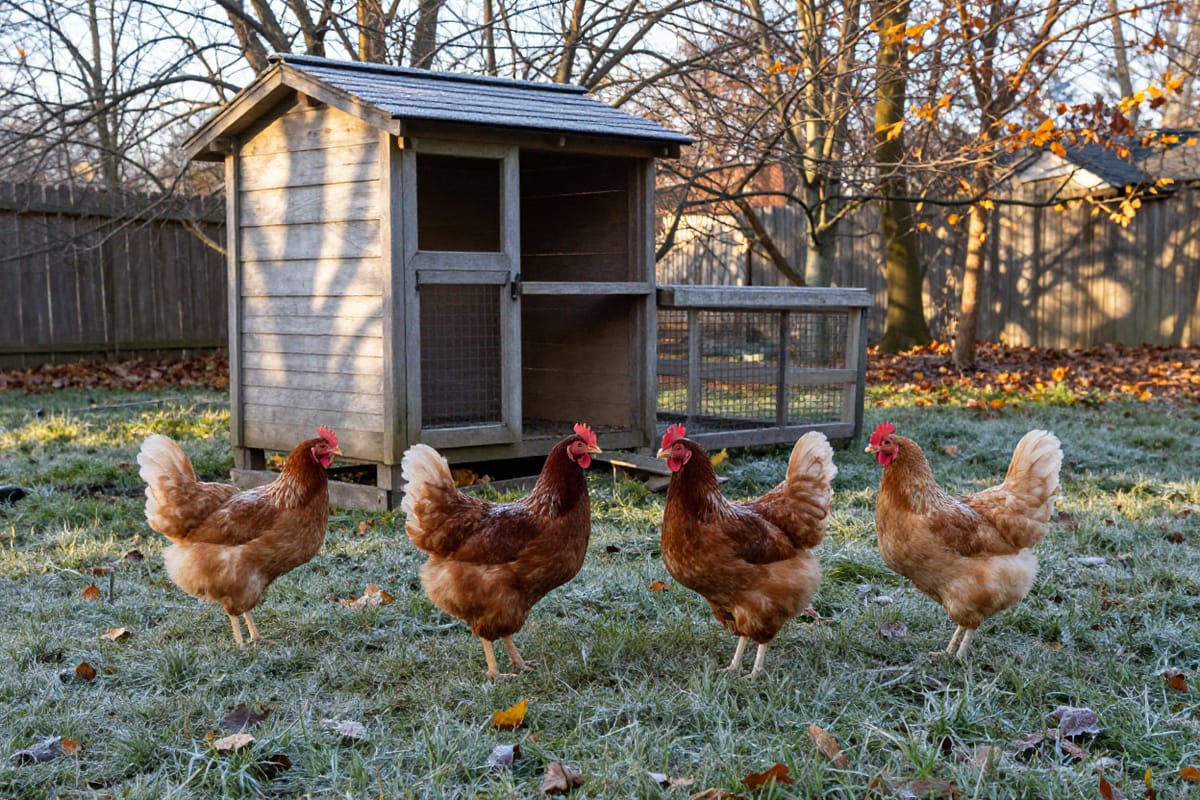
Most of the time, chickens stop laying for one of eight ordinary reasons: short days, molt, age, stress, diet, broodiness, eggs laid where you aren’t looking, or eggs eaten before you find them. If you are asking “why are my chickens not laying eggs” in late autumn, the first two explain most flocks. Days are short and many hens are mid-molt.
Before changing anything, check the calendar, look for feathers on the coop floor and work out how old your hens are. A healthy, alert hen that is still eating and has simply paused is usually fine and will restart by late winter or spring. A hen that has stopped laying and also looks hunched, lethargic or off her food is unwell, and that matters far more than the missing eggs.
Why are my chickens not laying eggs? The quick checklist
| Cause | Typical signs | What to try first |
|---|---|---|
| Short days | Gradual drop from October, whole flock | Wait, or add morning light |
| Molt | Loose feathers, patchy hens | Raise protein, reduce stress |
| Age | Hens 3+ years, fewer eggs | Accept it, plan younger birds |
| Stress | Drop after a move, predator, new birds or heat | Remove the cause, allow 1-3 weeks |
| Diet | Lots of scratch or treats, thin shells | Back to complete layer feed |
| Broodiness | One hen flat in the nest, growling | Break her or let her hatch |
| Hidden nests | Free-ranging flock, empty nest box | Keep them in for a week |
| Pests or egg eaters | Shell bits, yolk on straw, missing eggs | Collect twice daily, secure coop |
Daylight: the usual winter culprit
Hens lay best with roughly 14 to 16 hours of light a day. Below about 12 hours, most slow down or stop. In much of the US that happens from October to February; in the UK, where winter days are shorter, the gap is longer.
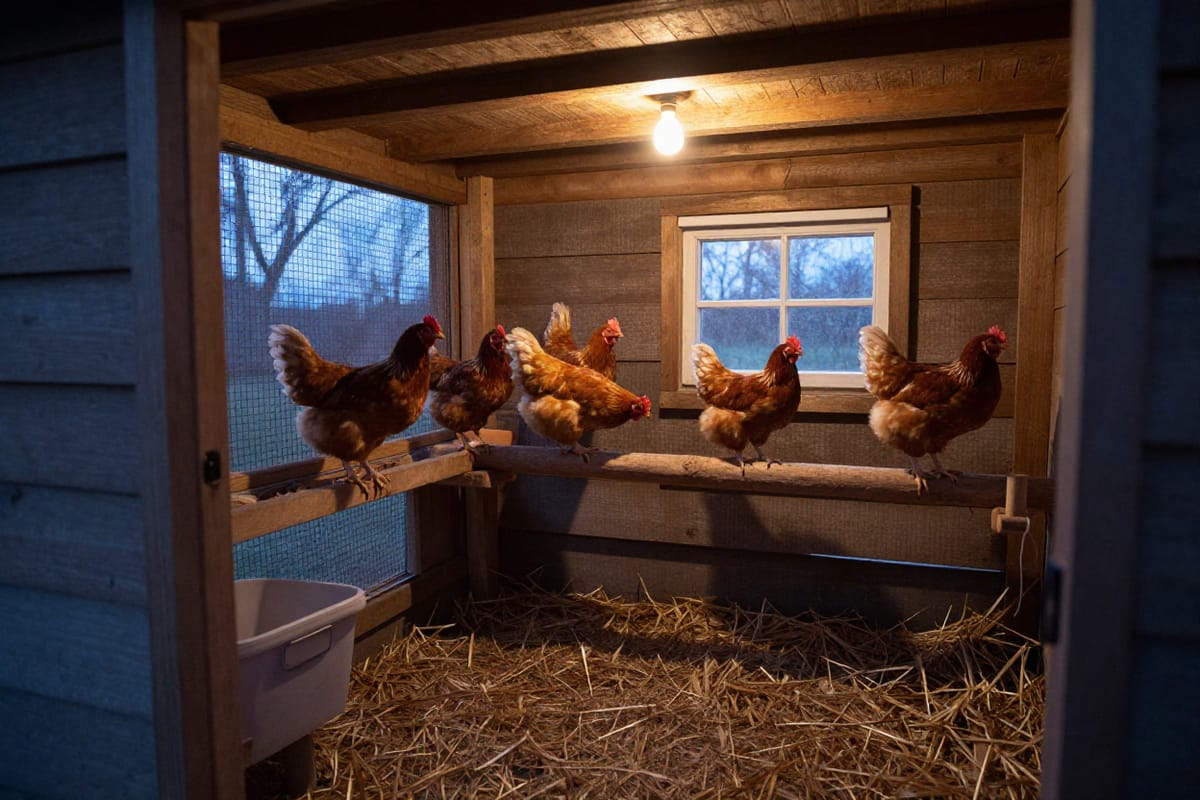
You can add light to keep eggs coming. Put a timer on a low-wattage bulb so it comes on in the early morning and switches off once daylight arrives, keeping total light near 14 hours. Add it gradually, about 15 to 30 minutes a week, and let evenings darken naturally so hens can find the roost.
Keepers disagree on this one. Some see winter lighting as normal husbandry; others think hens benefit from the rest. For a small backyard flock we would start by doing nothing and letting them rest, especially hens that are molting. Extra light is a choice. A hen that slows down in December isn’t broken.
Molt and age
Most hens molt every year, usually in autumn, losing and regrowing feathers over 8 to 12 weeks, sometimes longer. Feathers are mostly protein, so laying stops while the body rebuilds. The signs are hard to miss: feathers in the run, bald patches, pin feathers and a hen who suddenly dislikes being handled.
During molt, switch to a feed of 18-20% protein (a grower or all-flock feed with oyster shell on the side), cut back on low-protein treats and avoid handling or adding new birds. Laying returns when the new coat is in.
Age matters too. Pullets usually start at 18 to 24 weeks, and production drops noticeably each year after the second laying season. A four-year-old hen laying a couple of eggs a week is normal. Some heritage breeds also lay fewer eggs than hybrids from the start; see our breed guides for realistic expectations.
Diet, stress and broodiness
Diet. A complete layer feed with around 16% protein should make up most of what hens eat. Scratch, kitchen scraps and treats are fine, but keep them to about 10% of the diet. Offer oyster shell separately for calcium, and keep water clean and unfrozen; even a day without water can stop lay.
Stress. Moving house, a fox or hawk visit, new flockmates, bullying, a dog in the garden or heat above roughly 85°F (29°C) can all halt laying for a week or more. Mites and lice count as stress too, so check under the wings and around the vent at night. Our care section covers routine checks.
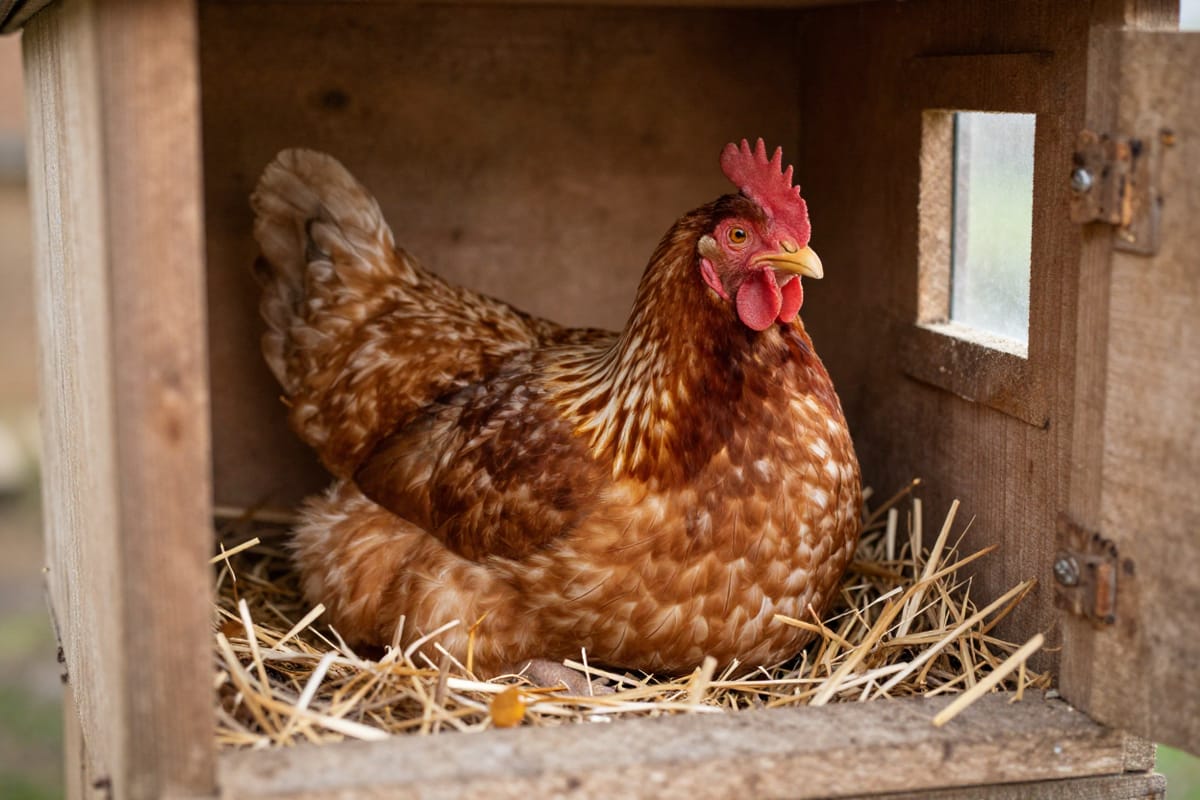
Broodiness. A broody hen sits flat in the nest, puffs up, growls at you and stops laying. If you want chicks and have fertile eggs, let her sit for about 21 days. If not, collect eggs promptly and move her somewhere bright with food and water but no bedding for a few days to break the mood.
Hidden nests and egg thieves
Free-ranging hens often start a private nest under a hedge or shed. If egg numbers drop while hens look busy and healthy, keep them in the run for a week. They will go back to the nest box, and you may find the hidden clutch.
Eggs can also vanish. Rats, snakes, magpies, crows and some dogs take whole eggs and leave little trace. Hens that eat their own eggs usually leave wet yolk, shell bits or sticky beaks behind. To deal with both:
- Collect eggs at least twice a day
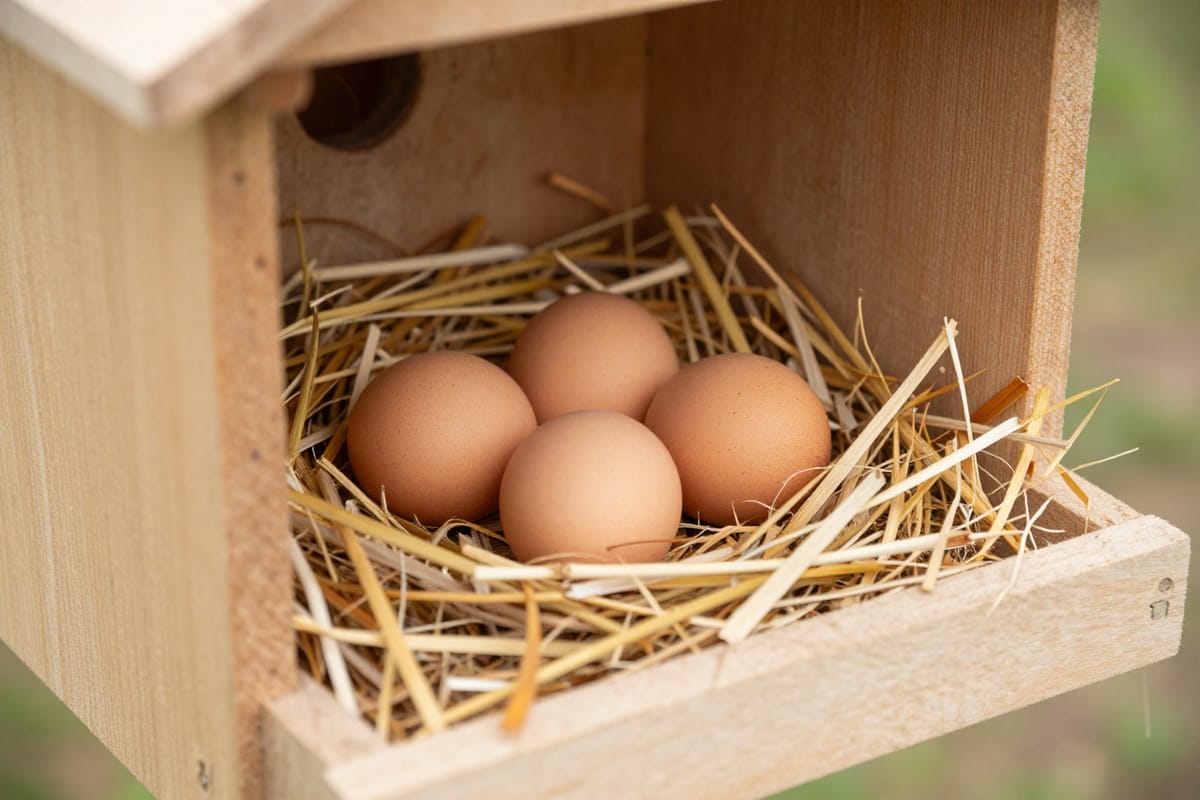
- Keep one nest box per four or five hens, dim and well bedded
- Fix soft shells by checking feed and oyster shell
- Rat-proof feed and close the pop hole at dusk
Our coop guides cover nest box layout and predator-proofing.
What to try first
Work in this order, since the early steps cost nothing:
- Check the date and day length. November to January pauses are normal.
- Look for molt. Feathers on the floor usually settle it.
- Check ages. Older hens lay less, and that is fine.
- Watch for broodiness and hidden nests for three or four days.
- Audit feed. Layer feed first, treats last, water always.
- Look for pests, mites and egg eating.
- Think back over the last month for stress or changes.
See an avian vet if a hen strains without passing an egg, sits upright like a penguin, has a swollen or hot abdomen, stops eating, or loses weight. Egg binding and internal laying are emergencies. Our health section explains the warning signs in more detail.