Best Chickens for Beginners, Compared Breed by Breed
The best chickens for beginners are calm, hardy and lay steadily. We compare eight breeds on temperament, eggs, climate and noise, then pick by situation.
Nest Box Notes team ·
- Cost
- $5-40 per bird
- Flock size
- 3-6 hens
- Level
- Beginner
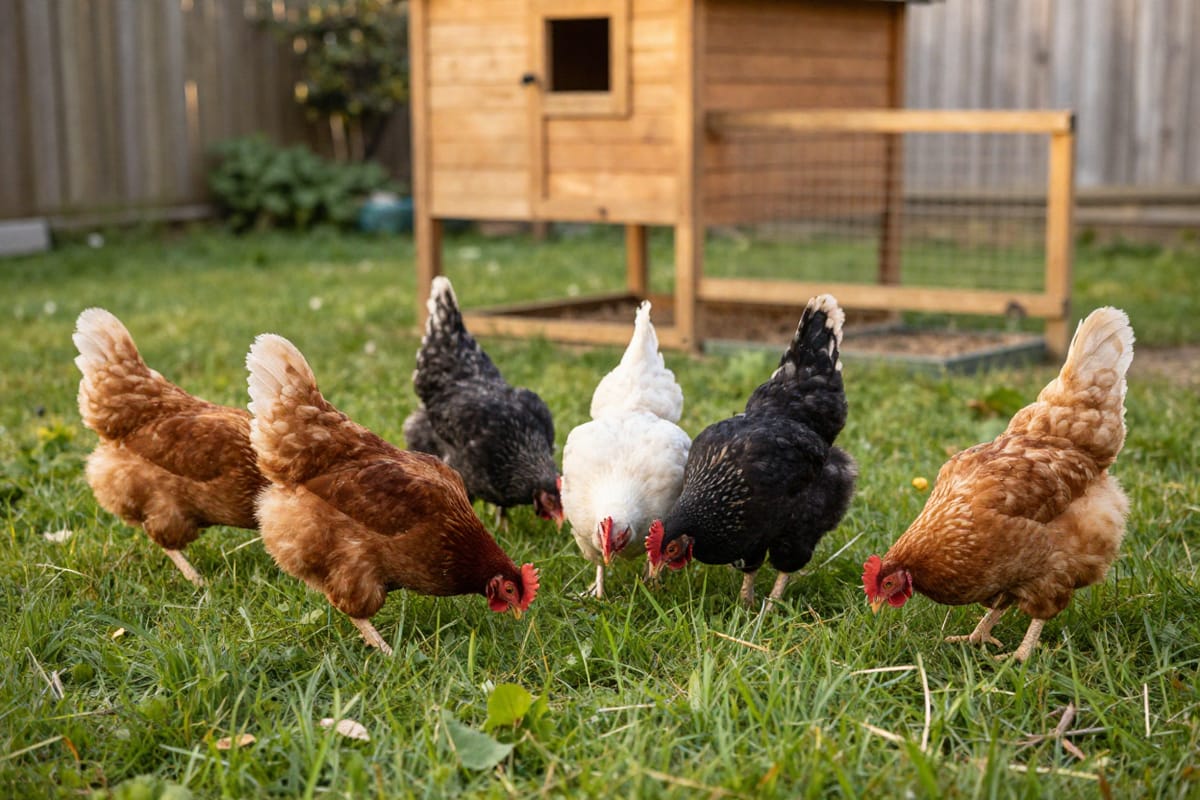
The best chickens for beginners are calm, cold-hardy dual-purpose breeds that lay steadily without much fuss. Buff Orpingtons, Australorps, Barred Plymouth Rocks, Wyandottes and Sussex show up on most lists, ours included. Brown commercial hybrids such as red sex-links lay more eggs and are just as easy to handle, but their laying life is shorter.
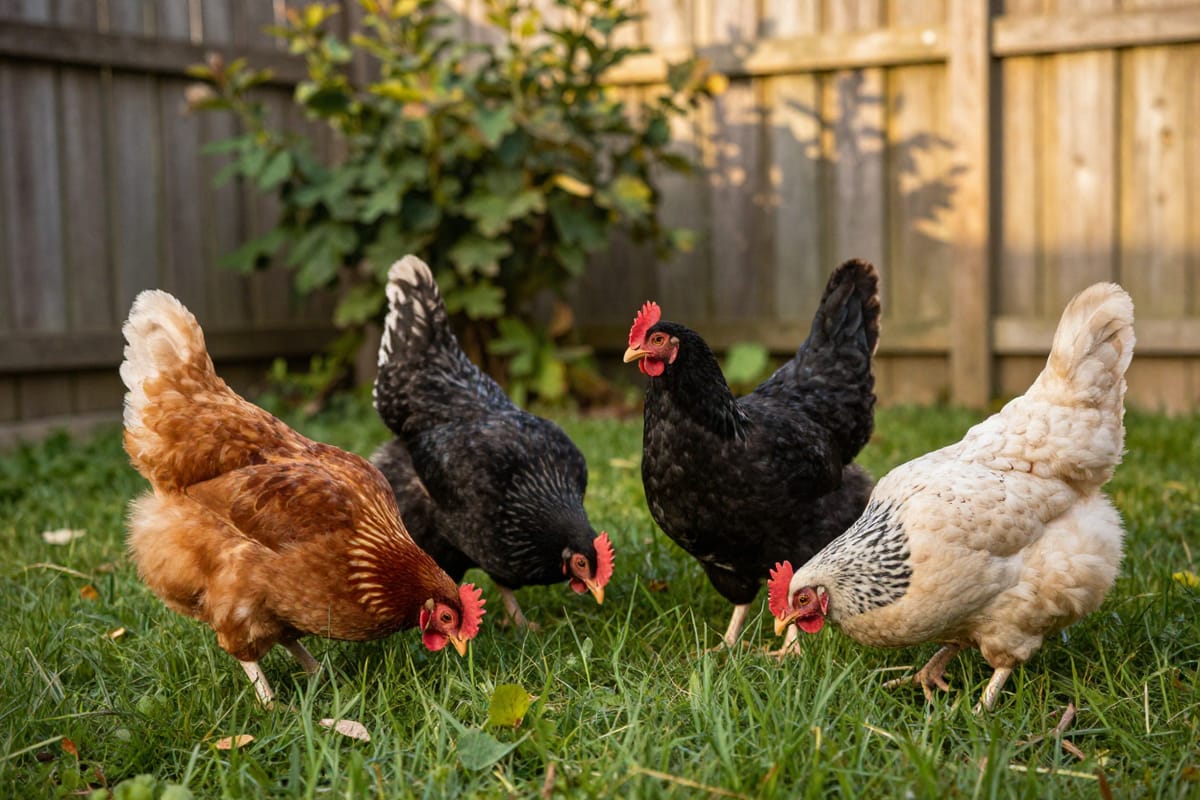
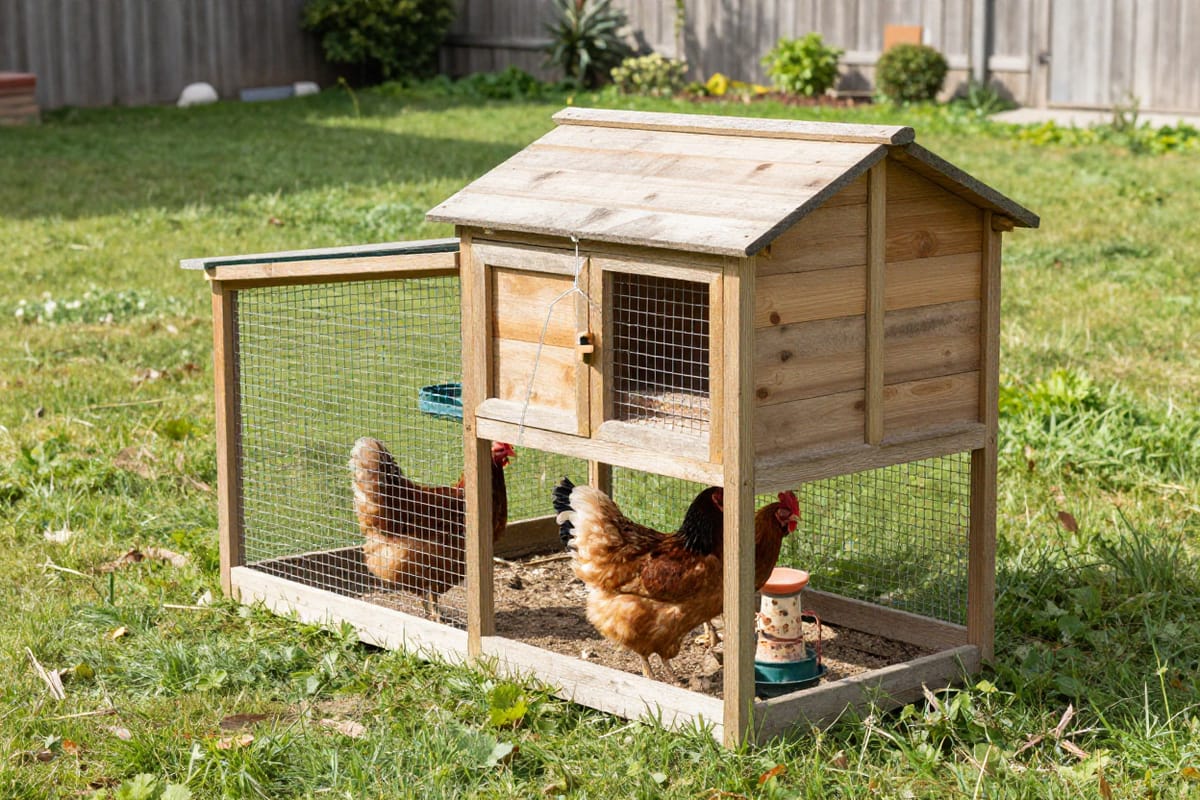
For a first flock of three to six hens, we would buy point-of-lay pullets rather than chicks, from two or three of those breeds. A mix makes it easy to tell hens apart, and docile birds keep pecking-order squabbles mild. Leghorns and other flighty Mediterranean layers can wait until you have a season behind you. So can breeds bought mainly for looks.
What makes a breed beginner-friendly
Four things matter more than egg count:
- Temperament. A hen you can pick up is easier to check for mites, inspect when she seems off, or carry in at dusk. Docile breeds also bully less.
- Hardiness. Heavy-bodied birds with small or rose combs cope with winter far better than light, large-combed types.
- Steady laying. 180 to 280 eggs a year per hen is plenty for most households.
- Noise. Every hen sings after laying, but some breeds keep it short.
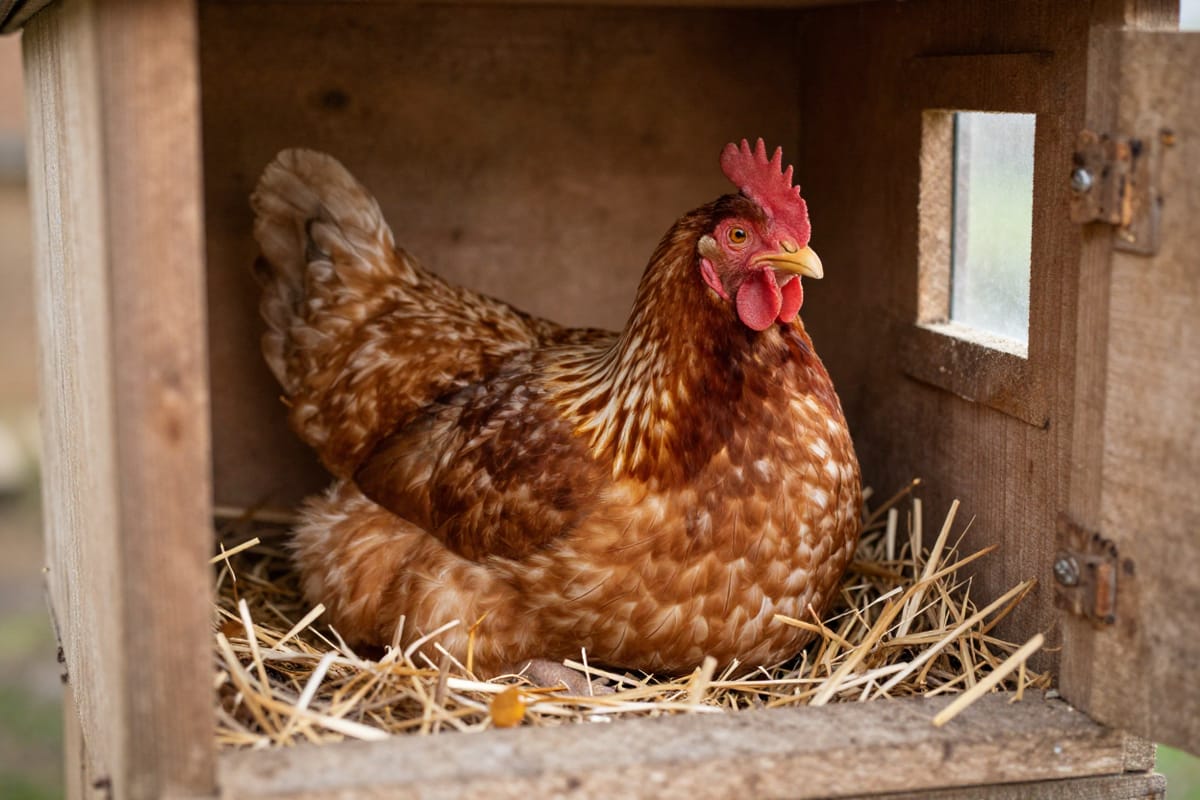
Broodiness is the trade-off people tend to forget. Orpingtons and Brahmas go broody often. That is a nuisance if you only want eggs, and handy if you later decide to hatch some.
The best chickens for beginners, compared
| Breed | Temperament | Eggs/year (approx.) | Egg color | Cold | Heat | Noise |
|---|---|---|---|---|---|---|
| Buff Orpington | Very docile | 180-220 | Light brown | Excellent | Fair | Quiet |
| Australorp | Calm, friendly | 250-300 | Brown | Excellent | Good | Quiet |
| Barred Plymouth Rock | Calm, curious | 200-280 | Brown | Excellent | Good | Moderate |
| Wyandotte | Calm, a bit aloof | 180-240 | Brown | Excellent | Fair | Moderate |
| Sussex | Docile, inquisitive | 220-260 | Tinted to light brown | Very good | Good | Quiet |
| Brahma | Gentle, slow | 150-200 | Brown | Excellent | Poor | Quiet |
| Easter Egger | Varies, mostly friendly | 200-250 | Blue or green | Good | Good | Moderate |
| Red sex-link hybrid | Friendly, busy | 280-300 | Brown | Good | Good | Chatty |
These are typical first- and second-year ranges. Hatchery lines often lay more than show lines of the same breed, and every breed slows down with age.
Breed notes the table leaves out
Buff Orpington. The classic lap chicken. All those dense feathers hide weight loss, so handle them weekly.
Australorp. Our pick for the best all-rounder. Black plumage soaks up sun, so give them shade in summer.
Barred Rock. Hardy and good at foraging. They can be a little assertive at the top of the pecking order.
Wyandotte. The rose comb shrugs off frostbite. Some lines are bossy toward smaller hens.
Sussex. Sold as Speckled Sussex in the US and Light Sussex in the UK. Tame, curious and good in a garden.
Brahma. Very large, with feathered feet. They need a wider pop door, low perches and a run that does not turn to mud.
Easter Egger. A US mixed type, not a standardized breed, so temperament varies from bird to bird. UK keepers usually get blue eggs from hybrids or Cream Legbars, which are flightier.
Hybrids. Many UK beginners start with vaccinated brown hybrids at point of lay, and we think that is a sensible choice. Keepers disagree on whether the extra eggs are worth it, because hybrids lay hard for two or three years and then drop off sharply. There is more on breed choice in our breeds section.
Climate: cold, heat and wet
Cold. Heavy breeds with small combs handle nights below 0°F (-18°C) as long as the coop is dry and well ventilated. Damp air causes more frostbite than cold air does. See our coop guides for ventilation.
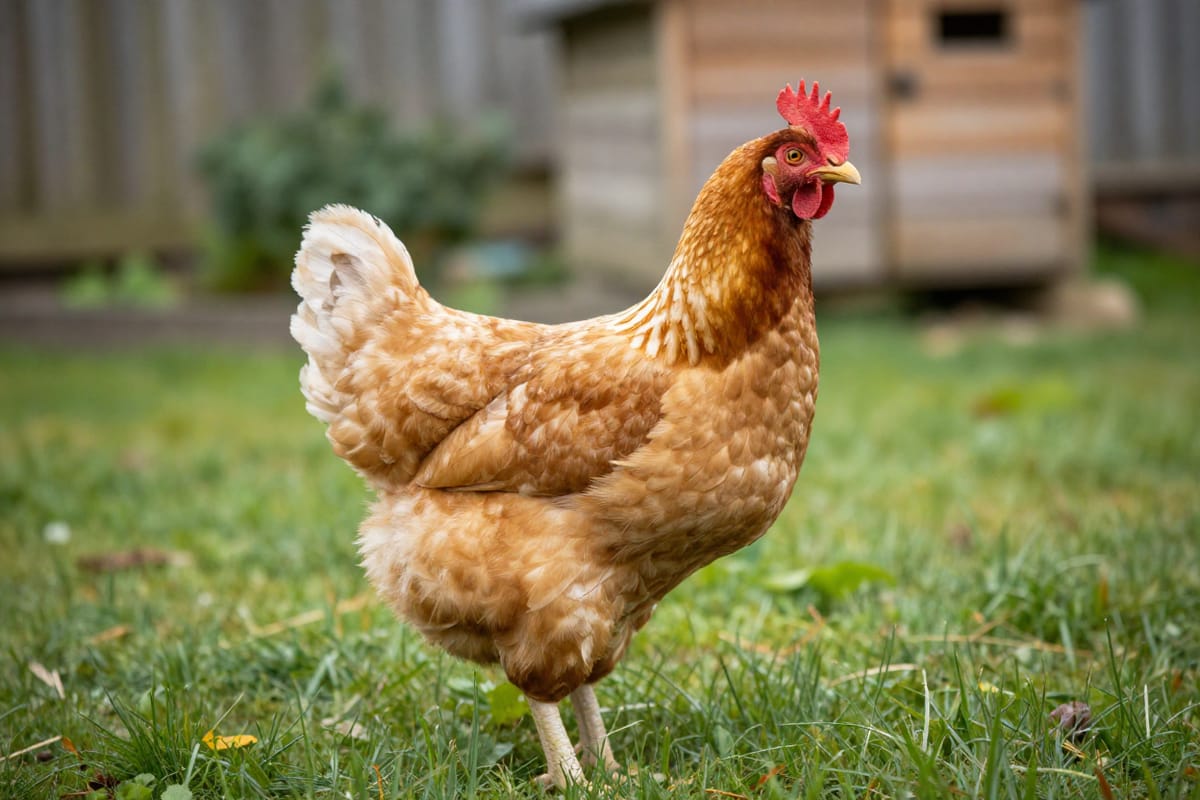
Heat. Above about 90°F (32°C), big, dark, heavily feathered birds struggle. Australorps cope better than Orpingtons, and the lighter-bodied sex-links and Easter Eggers cope better still. Even so, shade and cool water matter more than breed.
Wet. In rainy UK winters and muddy runs, feathered feet clog and stay wet. Plain-legged breeds are easier to manage.
Noise and neighbors
Hens are quieter than most people expect. The egg song lasts a minute or two, and you may hear some alarm calling if a hawk passes over. Orpingtons, Brahmas and Australorps tend to be the quietest, while busy hybrids chat all day.
Roosters are where noise becomes a problem, and many towns ban them. Chick sexing is not fully accurate, so a “pullet” can start crowing at four months. Sex-links can be sexed by color at hatch. Point-of-lay pullets, at 16 to 20 weeks old, take the guesswork out entirely.
Our pick list by situation
- Small suburban yard, children helping: Buff Orpington and Sussex.
- Hard winters: Wyandotte, Brahma, Australorp.
- Hot summers: Australorp, Easter Egger, red sex-link. Skip Brahmas.
- Most eggs from three hens: two sex-links plus one Australorp for longer-term laying.
- Close neighbors: Orpington, Brahma, Australorp.
- Might hatch chicks later: include an Orpington or Brahma as a broody.
- A colorful egg basket: Australorp, Easter Egger and Light Sussex.
Whatever you pick, buy from a source that vaccinates for Marek’s disease and quarantines new birds. And read our health basics before the hens arrive, not after.