Broody Hen Signs, and How to Hatch or Break the Brood
How to tell when a broody hen has really gone broody, how to decide between hatching chicks or breaking the brood, and what to do on each path.
Nest Box Notes team ·
- Time
- 21 days to hatch; 2-5 days to break
- Cost
- $0-60
- Flock size
- 3-12 hens
- Level
- Beginner
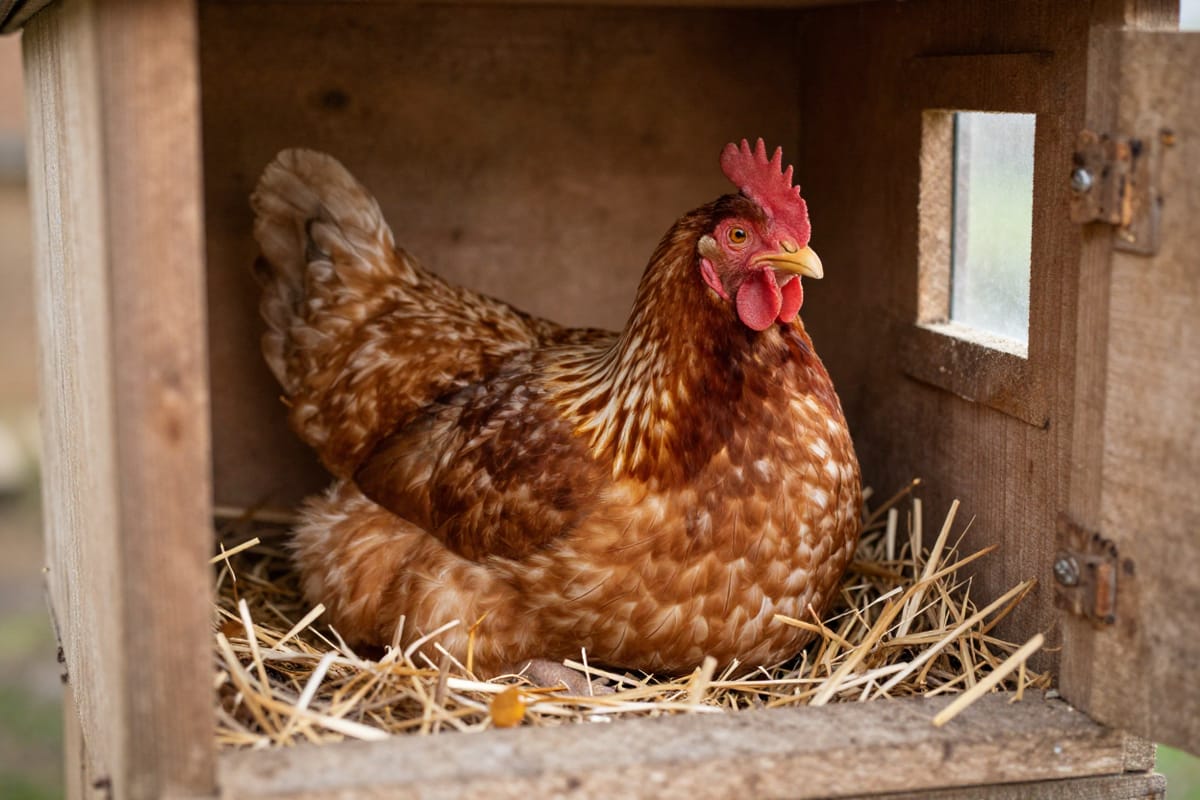
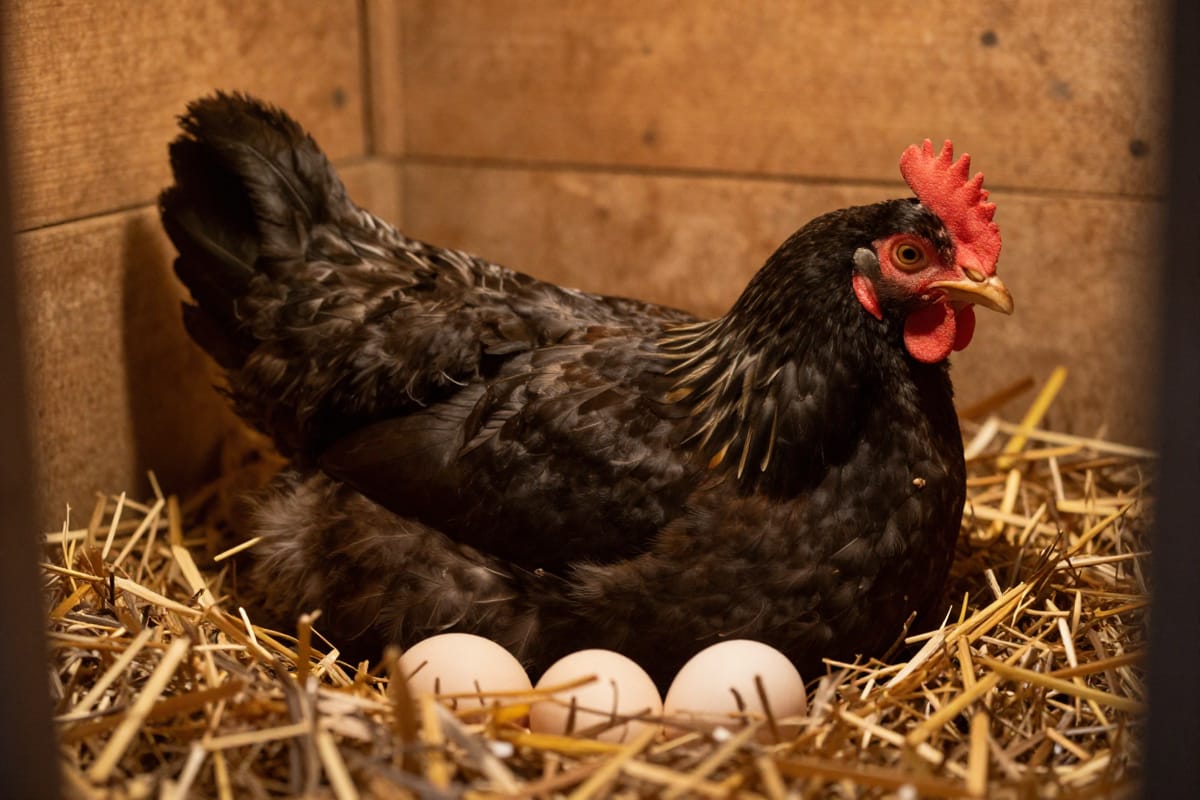
A broody hen is one whose hormones have switched her from laying eggs to hatching them. She stops laying, sits flat in the nest box day and night, puffs up and growls when disturbed, and leaves only once or twice a day to eat, drink and pass one large dropping. You then have two choices: give her fertile eggs and let her hatch them over about 21 days, or break the broodiness so she goes back to laying.
If you have fertile eggs and room for more birds, hatching is the simpler path for both of you. If not, break her early. Left alone on an empty nest, a broody spell can drag on for weeks, and she loses condition sitting on nothing.
How to tell a broody hen from a hen just laying
A laying hen sits for 20 minutes to an hour, then leaves. A broody one stays. Watch her for a day or two before deciding anything:
| Sign | What you see |
|---|---|
| Sleeps in the nest | She stays in the box overnight instead of on the perch |
| Flattens and puffs | Spreads wide, feathers fluffed, tail held low |
| Growls or pecks | A low rumbling noise and sharp pecks at your hand |
| Bare breast | She plucks belly feathers so skin touches the eggs |
| Broody droppings | One or two very large, smelly droppings a day |
| No eggs from her | Laying stops within a day or two |
| Hoarding | She rolls other hens’ eggs under herself |
One sign on its own means little. A hen who spends two nights in a row in the nest box is broody.
Some breeds go broody far more often than others. Silkies, Cochins, Orpingtons, Brahmas and many bantams are known for it, while Leghorns and most commercial hybrids rarely bother. Our breed guides note which is which. Broodiness peaks in spring and summer, but it can start in any month.
Hatch or break: how to decide
Answer these before you commit:
- Do you have fertile eggs? Without a rooster you will need to buy hatching eggs.
- Do you have space? Plan on roughly 4 sq ft (0.4 m²) of coop floor per adult bird, plus run space.
- What will you do with cockerels? Around half of any hatch will be male, and many towns ban roosters.
- Is she healthy? A thin hen, or one carrying mites, should be broken rather than set.
- Is the timing sensible? Hens raise winter chicks fine, but a long cold snap makes the first weeks harder.
If the answer to any of the first three is no, we would break her. Chicks are easy to get and hard to rehome.
Path one: letting her hatch eggs
- Give her a private nest. Move her at night to a quiet, enclosed spot at floor level, such as a large dog crate or a partitioned corner. Some keepers leave her where she is. We prefer to move her, because other hens keep laying in a shared nest and the hatch ends up staggered.
- Check she settles. Give her a day or two on dummy eggs or golf balls in the new spot. Some hens abandon a nest after a move, and it is better to find out before real eggs are involved.
- Set the eggs. A full size hen can cover about 8 to 12 large eggs; a bantam, 5 to 7. Mark each one with pencil so you can spot and remove any newcomers.
- Put food and water within a few steps. She will eat very little, so make it easy.
- Candle if you like, around day 7 to 10. Remove clear eggs that show no veins. This is optional, and plenty of hens hatch well without it.
- Leave her alone from day 18. Do not lift her or move eggs during the final days.
- Expect chicks around day 21. Give stragglers until day 24 or 25 before removing unhatched eggs.
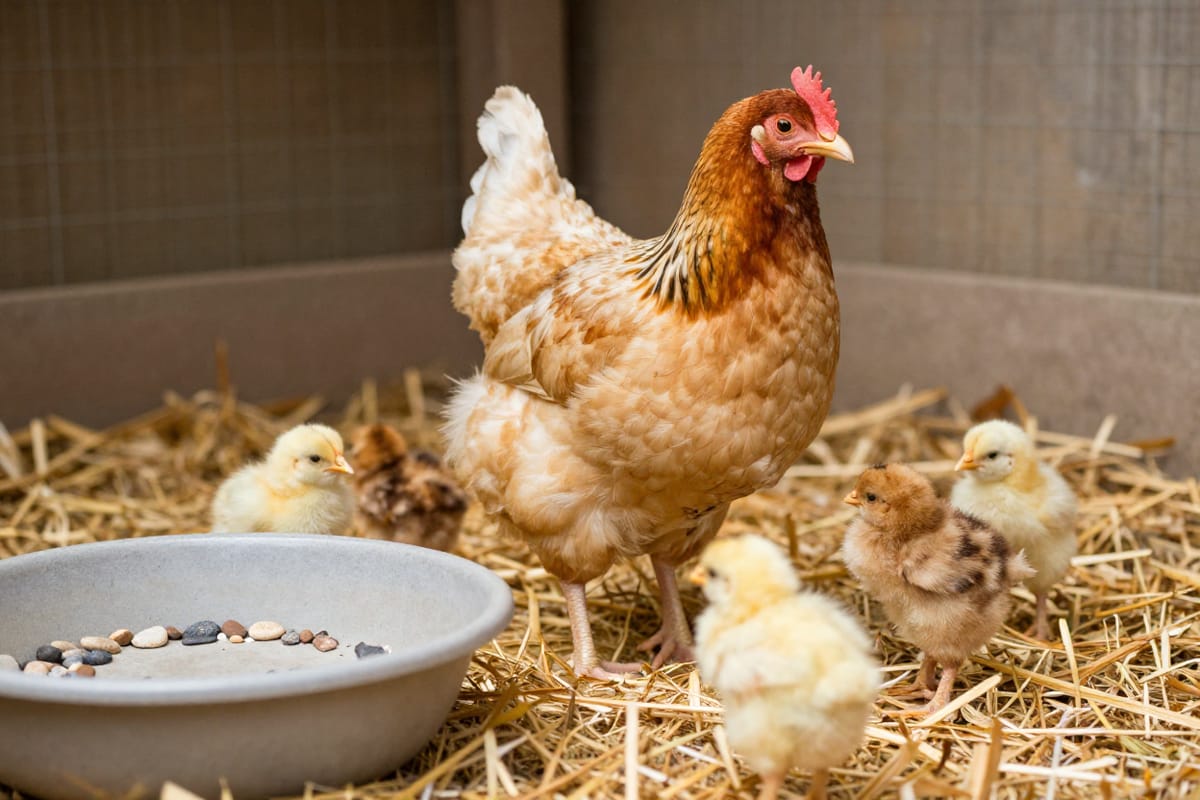
- Switch everyone to chick starter crumb, about 18 to 20% protein, with oyster shell offered separately for her. Use a shallow waterer with pebbles in it so chicks cannot drown.
She provides the warmth, so you don’t need a heat lamp. Keep the family apart for the first couple of weeks, ideally where the flock can see them. Most hens bring their chicks back into the flock themselves. Our care section covers integration in more detail.
Path two: breaking a broody hen
Act in the first few days. The longer she sits, the more stubborn the hormones get.
- Remove her and the eggs. Lift her off the nest each time you see her there and collect eggs often. Mild cases sometimes end here.
- Block her favourite nest at night. Reopen it in the morning so the others can lay.
- Use a broody breaker. Put her in a cage with a wire floor, raised on bricks, with food and water but no bedding. Air moving under her belly cools her and helps reset the hormones. Keep the cage within sight of the flock.
- Test after 2 to 5 days. Release her in the evening. If she heads straight back to the nest, give her another day or two in the cage.
- Expect eggs again in one to three weeks.
Keepers disagree about cold water dips and ice packs under the hen. We skip both. They stress her and can chill her, and the wire cage works without them.
When broodiness becomes a health issue
Most broody hens come through fine, but check her every couple of days. Feel her keel bone for weight loss, look for mites around the vent and in the nest, and make sure she is eating, drinking and producing droppings.
See an avian vet if she stops eating or drinking even once off the nest, seems weak or hunched outside the box, has a swollen or hot abdomen, or keeps sitting for weeks no matter what you try. Some illnesses look like broodiness at first. Our health guides list other warning signs.