The Best Egg Laying Chickens Ranked by Eggs Per Year
The best egg laying chickens ranked by eggs per year, with notes on egg color, temperament and climate, a comparison table and help choosing a breed for your flock.
Nest Box Notes team ·
- Flock size
- 3-12 hens
- Level
- Beginner
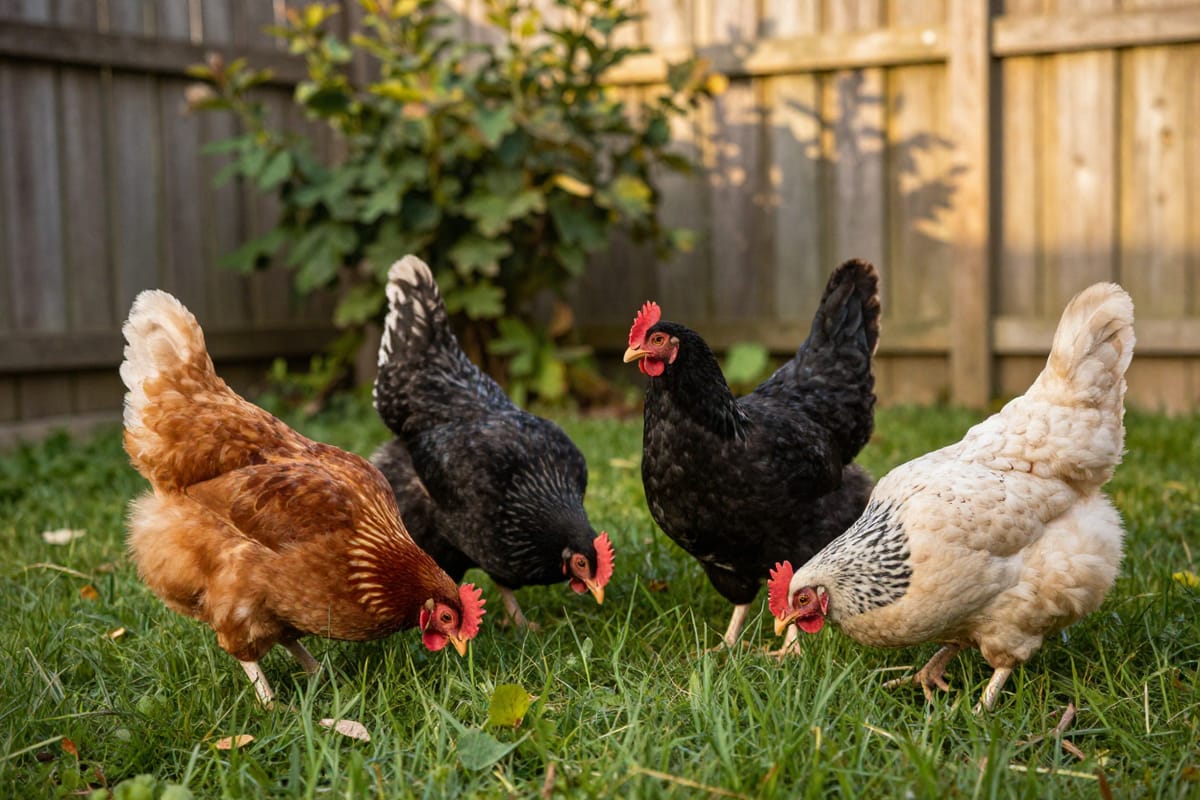
If you want the most eggs, the best egg laying chickens are commercial hybrids such as ISA Brown and Golden Comet, along with the White Leghorn. A healthy hen of any of these typically lays 280 to 320 eggs in her first full year. If you’d rather have calmer birds that lay well for longer, we would start with Rhode Island Reds, Australorps or Light Sussex, which usually manage 250 to 300.
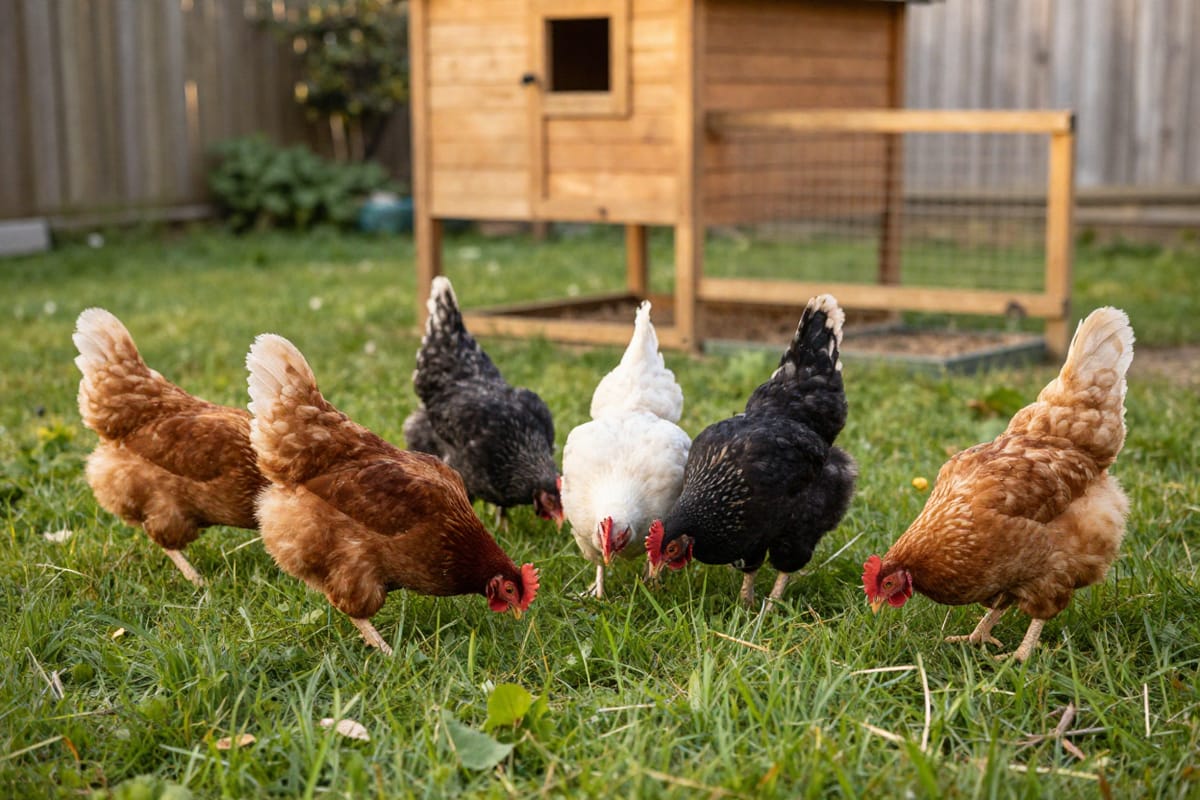
The numbers are only part of the decision, though. In a flock of 3 to 12 hens, egg color, temperament and how a breed copes with your winters or summers matter more than an extra 20 eggs. Every hen lays less each year after her second season, and high output hybrids tend to slow down sooner.
How we ranked the best egg laying chickens
We ranked breeds by typical first-year production from well fed hens on 16% protein layer feed with 14 to 16 hours of light. These are ranges keepers and breeders commonly report, not guarantees. Strain, diet, molt and daylight all shift the numbers.
After that, we looked at what matters in a backyard:
- Egg color, if you want a mixed basket.
- Temperament, especially with children around or in a small run.
- Climate. Tall single combs get frostbite below about 20°F (-7°C), and heavy, dense-feathered birds struggle above 90°F (32°C).
Comparison table of top laying breeds
| Breed | Eggs per year (first year) | Egg color | Temperament | Best climate |
|---|---|---|---|---|
| ISA Brown / Golden Comet | 280-320 | Brown | Friendly, bold | Most climates |
| White Leghorn | 280-320 | White | Flighty, active | Hot |
| Rhode Island Red | 250-300 | Brown | Confident, can be pushy | Cold and moderate |
| Australorp | 250-300 | Brown | Calm, gentle | Cold and moderate |
| Light Sussex | 250-275 | Cream to tinted | Docile, curious | Cold and wet |
| Barred Plymouth Rock | 200-280 | Light brown | Calm, sturdy | Cold |
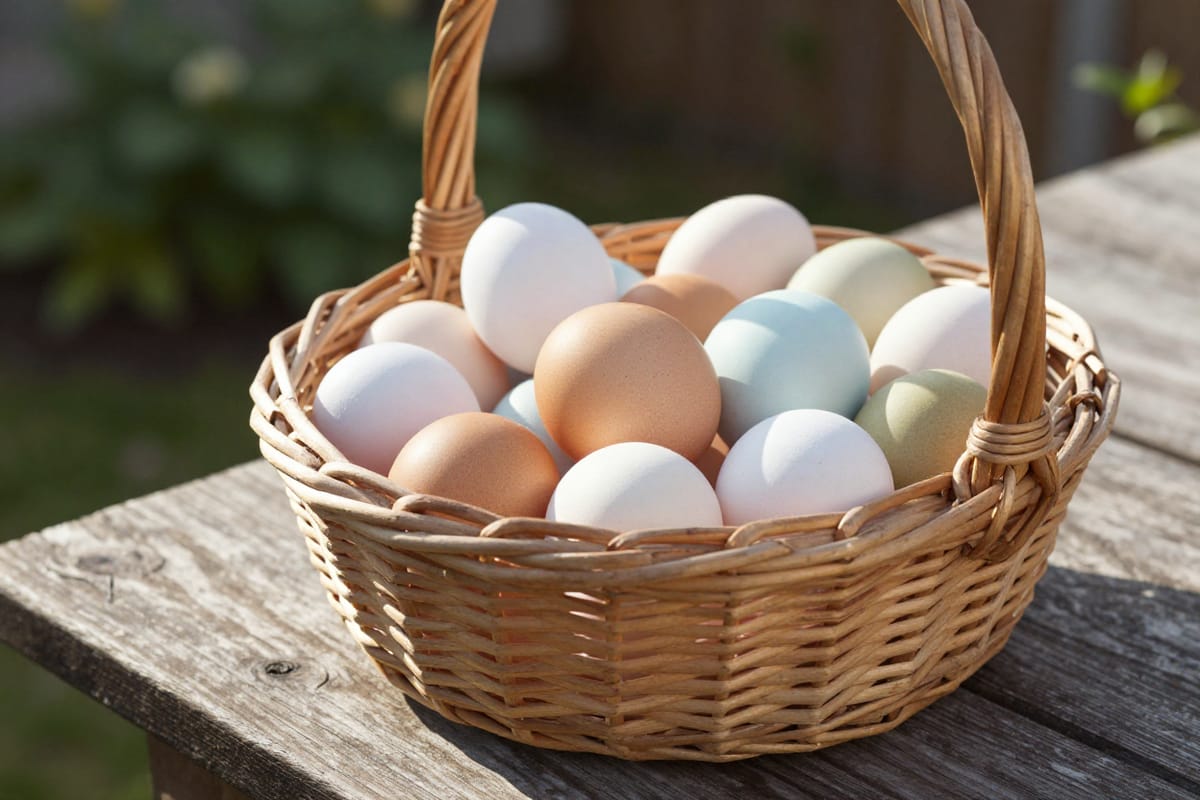
| Easter Egger | 200-280 | Blue, green, olive | Varies, often friendly | Cold |
| Wyandotte | 200-240 | Brown | Steady, sometimes aloof | Very cold |
For fuller profiles, see our breeds section.
The top layers, one by one
ISA Brown and Golden Comet
These sex-linked hybrids were bred for one job, which is laying. They often start at 18 to 20 weeks, rarely go broody and are easy to handle, so they work well for a first flock. The downside is that output usually tails off after two to three years, and they are more prone to reproductive problems later on. If a hen’s abdomen looks swollen or feels full of fluid, take her to an avian vet.
White Leghorn
This is the classic white-egg bird. Leghorns are light, efficient on feed and handle heat well. They are also nervous and fly well, so they suit keepers who care more about eggs than lap chickens.
Rhode Island Red
Reds are hardy and keep laying through cold months. Production strains lay more than heritage show lines. In a cramped run, hens can bully gentler breeds.
Australorp
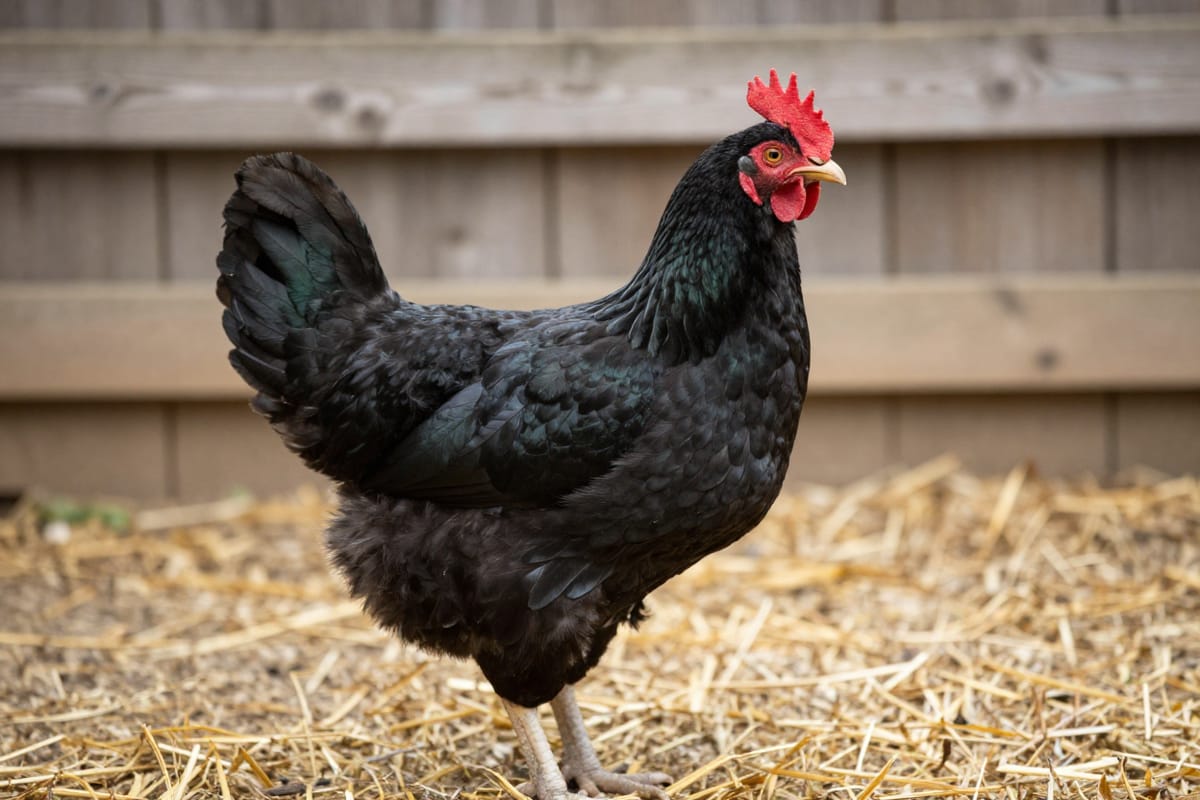
For beginners who want a calm, productive bird, this is our first pick. Australorps are docile and cold hardy. Their black feathers absorb heat, so they need shade in summer.
Sussex, Plymouth Rock, Easter Egger, Wyandotte
These breeds lay fewer eggs, but they keep going for longer and tend to have fewer health problems. Sussex and Rocks are friendly and forgiving. Easter Eggers add blue and green eggs to the basket. Wyandottes handle deep cold well thanks to small rose combs and dense feathering.
Matching breed to climate and egg color
- Cold winters, below 20°F (-7°C): Australorp, Wyandotte, Plymouth Rock, Easter Egger, Rhode Island Red. Pea or rose combs are the safer choice.
- Hot summers, above 90°F (32°C): Leghorns, hybrids and lighter-bodied birds, as long as they have shade, airflow and plenty of water.
- Wet, mild climates like much of the UK: Sussex, hybrids and Australorps do well if the house stays dry and well ventilated. Our coop guides cover ventilation.
For a colorful basket, mix breeds: a Leghorn for white, an Australorp or hybrid for brown, an Easter Egger for blue or green. Shell color doesn’t change what’s inside. Feed and freshness matter far more.
Hybrids vs heritage breeds: where keepers disagree
Some keepers swear by hybrids because they lay more eggs, start earlier and are usually friendly. Others prefer heritage breeds that keep laying for five or six years, go broody and don’t burn out.
We think both camps have a point. If eggs per square foot of run is your priority, start with hybrids. If you plan to keep hens for their whole lives, heritage layers pay off over time. Our own suggestion is a mix: two hybrids for steady eggs, plus two or three Australorps or Sussex for longevity.
Getting the most eggs from any breed
Even a top breed lays poorly if the basics slip:
- Feed a complete 16% protein layer ration once hens start laying, with oyster shell on the side.
- Give clean water daily. Hens stop laying quickly without it.
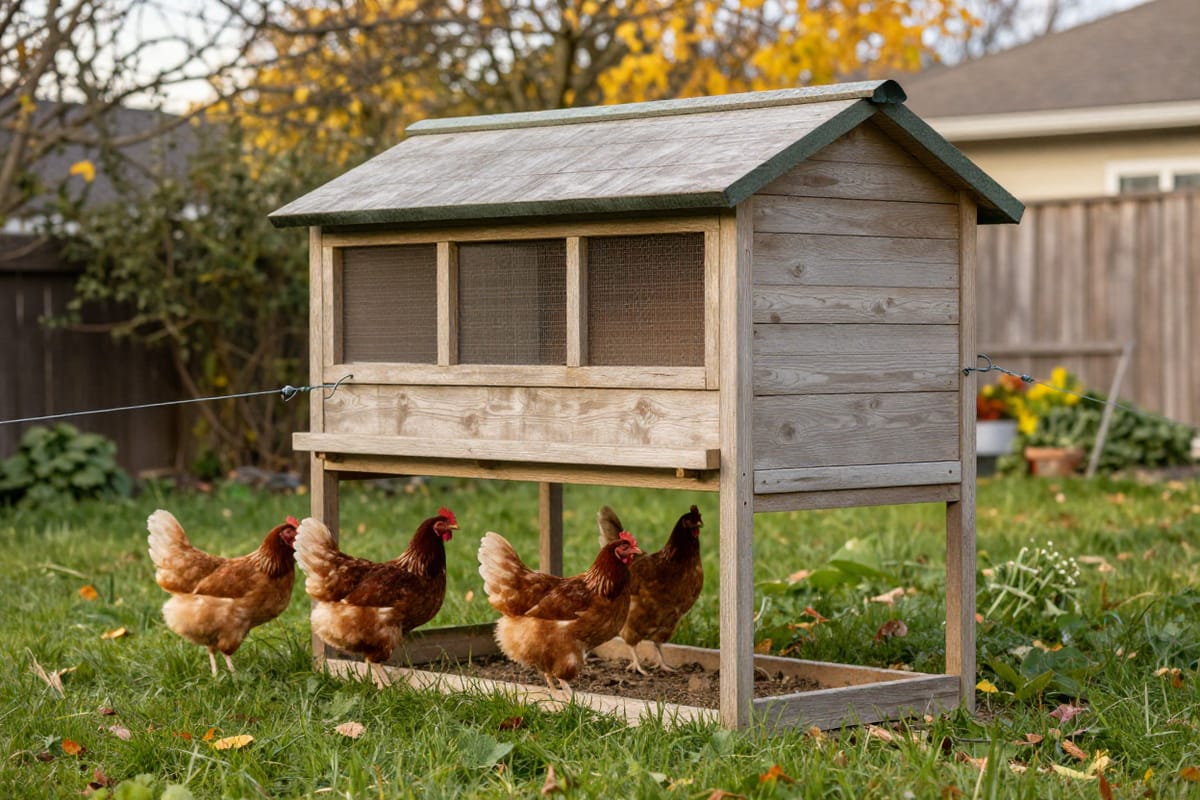
- Allow at least 4 sq ft (0.4 m²) per bird indoors and 10 sq ft (0.9 m²) in the run.
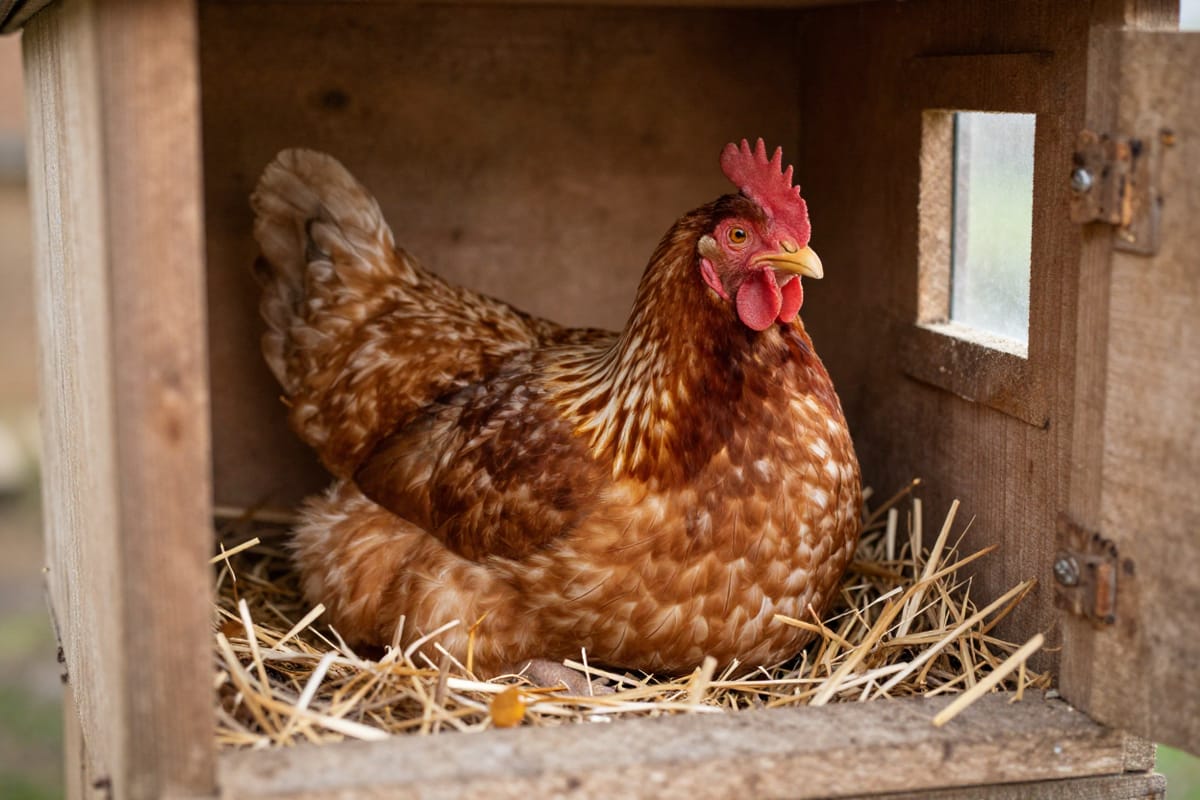
- Provide one nest box per three to four hens.
- Expect a pause during autumn molt and short winter days.
Our egg guides cover laying gaps and shell quality in more detail.