What Do Chickens Eat? Feed, Grit, Treats and Amounts
What do chickens eat? Feed by age, protein and calcium, grit, safe treats, daily amounts per hen, and the foods to keep out of the run.
Nest Box Notes team ·
- Time
- 10 minutes a day
- Cost
- $20-40 a month
- Flock size
- 3-12 hens
- Level
- Beginner
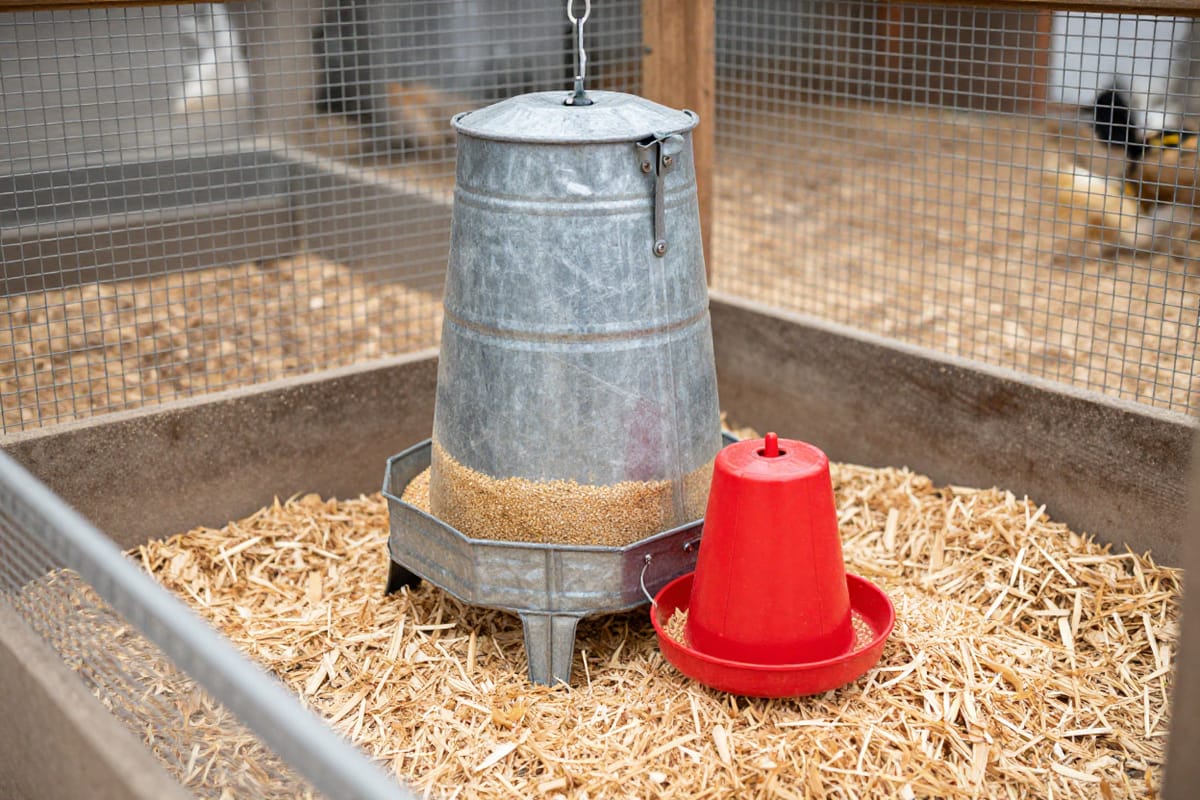
What do chickens eat? Mostly a complete commercial feed matched to their age, and that feed should make up at least 90% of the diet. Chicks get starter, growing pullets get grower, and laying hens get layer feed with about 16% protein and extra calcium. Add a separate dish of oyster shell, insoluble grit if they eat anything besides feed, and clean water at all times.
Everything else, scraps and mealworms included, belongs in the last 10%. A full-size hen eats roughly 1/4 lb (110-130 g) of feed a day, which leaves room for a small handful of greens, not a bowl of leftovers. Most shell, laying and feather problems trace back to the base feed, so that is the place to start.
What do chickens eat at each age?
Commercial feeds come in stages, and switching at the right time matters more than which brand you buy.
- Chick starter, 0-8 weeks. 18-20% protein, low calcium. Medicated versions help guard against coccidiosis, but chicks vaccinated against it should get unmedicated starter.
- Grower, 8 weeks to point of lay. 15-17% protein, still low calcium. Some brands sell a combined starter-grower for the first 16 weeks.
- Layer, from the first egg or about 18-20 weeks. 16-18% protein, 3.5-4.5% calcium. Wait for the first egg or red combs, because too much calcium in young birds can strain their kidneys.
- All-flock or flock raiser. 18-20% protein, low calcium. A good fit for mixed ages, roosters and moulting birds. Laying hens on it need oyster shell on the side.
Pellets waste the least, crumbles suit younger birds, and mash ends up flicked all over the run. Some keepers ferment feed to cut waste, but it spoils fast in warm weather. For most flocks, we would start with dry pellets in a covered feeder.
Protein and calcium: what the label means
Protein builds eggs and feathers. For a laying hen, 16% is enough, and pushing higher won’t get you more eggs. The exception is the moult, when hens regrow feathers that are almost pure protein. Switch to an 18-20% feed until the new feathers are in, usually 6-8 weeks, and keep oyster shell available.
Calcium builds shells. Each shell holds roughly 2 g of it, and a hen laying most days can’t fully cover that from feed alone. Offer crushed oyster shell free choice in its own dish rather than mixing it in, so each bird takes what she needs. Roosters and non-laying hens will ignore it. If shells stay thin or soft after a few weeks of oyster shell, talk to a vet. There’s more on shell quality in /topics/eggs.
How much to feed per hen per day
These are typical amounts for healthy birds on complete feed. Weather, breed and laying rate all shift them.
| Age or type | Feed | Protein | Rough daily amount |
|---|---|---|---|
| Chicks, 0-6 weeks | Starter | 18-20% | Free-feed, up to 2 oz (55 g) |
| Pullets, 6-16 weeks | Grower | 15-17% | 2-3.5 oz (55-100 g) |
| Laying hens | Layer | 16-18% | 4-4.5 oz (110-130 g) |
| Moulting hens | All-flock | 18-20% | 4-5 oz (110-140 g) |
| Bantams | Layer | 16-18% | 2-3 oz (55-85 g) |
Keepers disagree on free-feeding versus measured meals. Our default is free-feeding from a covered or treadle feeder, which keeps rats and wild birds out, and tracking use by how long a bag lasts. Hens eat noticeably more in cold weather. A sudden drop in appetite is often the first sign of illness, so it’s worth noticing; see /topics/health.
Don’t overlook water. An adult hen drinks around 500 ml (about a pint) a day, more in heat, and stops laying quickly without it.
Grit, scraps and treats
Chickens have no teeth. The gizzard grinds food using small stones, so any bird eating grass, grain or scraps needs insoluble grit (granite or flint) in its own dish. Pellets dissolve without it, but most hens forage, so we offer it anyway. Chicks need chick-size grit once they get anything besides starter. Oyster shell is not grit, since it dissolves.
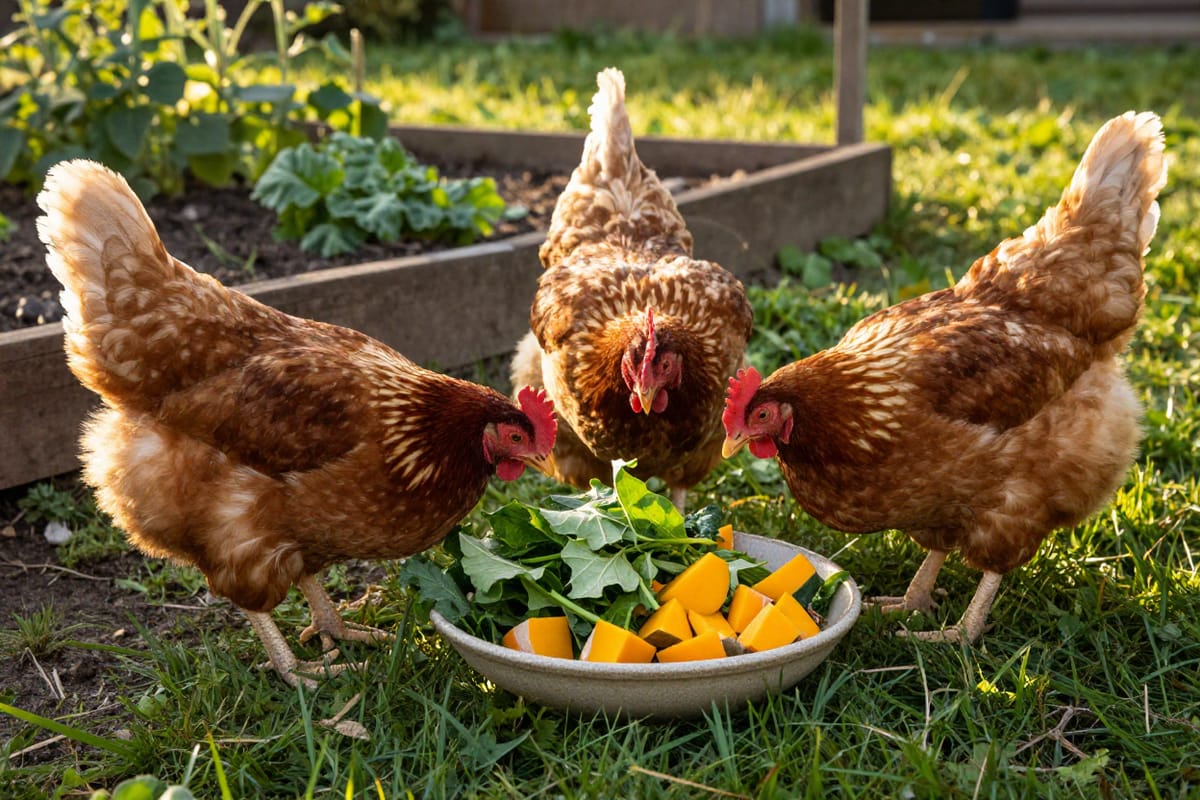
Keep treats to about 10% of the diet, which works out to a tablespoon or two per hen a day. Good options:
- Leafy greens, weeds and grass clippings (short, fresh)
- Squash, pumpkin and cucumber
- Berries and melon in small amounts
- Dried mealworms or black soldier fly larvae, a few per bird
- Scratch grains as a cold-weather afternoon treat
UK keepers: it is illegal to feed kitchen scraps, or anything that has passed through a kitchen, to chickens, even pets. Greens taken straight from the garden are fine. In the US, plain leftovers are legal, but skip anything salty or greasy. More routines in /topics/care.
Foods to avoid
Keep these out of the run:
- Avocado skin and pit
- Raw or undercooked dried beans
- Chocolate, coffee grounds and tea leaves
- Mouldy or spoiled food of any kind
- Salty, sugary or greasy leftovers
- Green potato skins and green tomato plants
- Rhubarb leaves
- Alcohol
Onions and citrus divide keepers. We keep them to small amounts or leave them out.
If a hen eats something toxic and turns lethargic, stops eating or has watery droppings, move her somewhere quiet with water and call an avian vet.