How to Keep Chickens Warm in Winter Without a Heat Lamp
How to keep chickens warm in winter: a dry, ventilated coop with no drafts at roost level, wide flat roosts, unfrozen water and good feed, plus why we skip heat lamps.
Nest Box Notes team ·
- Time
- 10 minutes a day
- Cost
- $40-120
- Flock size
- 3-12 hens
- Level
- Beginner
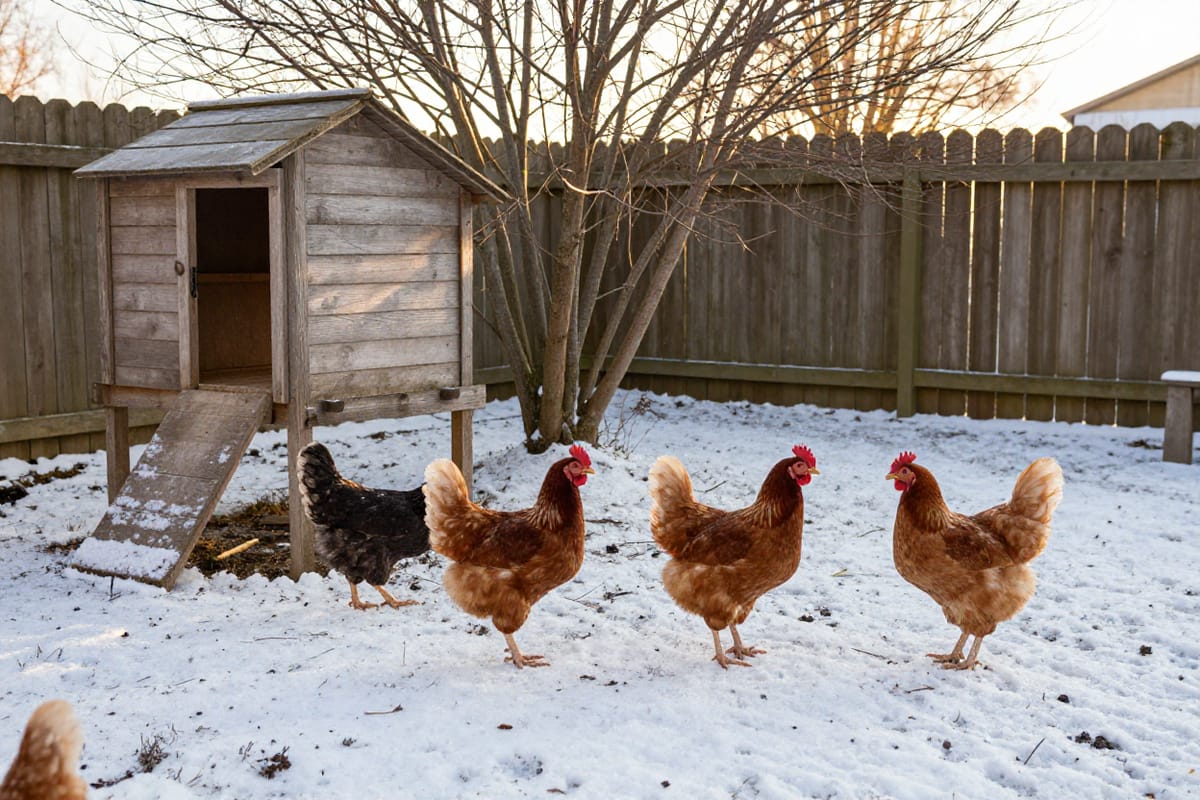
Healthy, fully feathered hens keep themselves warm. What they need from you is a dry coop with no drafts at roost level, ventilation above their heads, flat roosts they can tuck their feet over, unfrozen water and plenty of feed. For most backyard flocks in the US and UK, that covers how to keep chickens warm in winter, and none of it involves a heat lamp.
A chicken runs at about 105-107°F (40.5-41.5°C) and wears its own down jacket. Acclimated birds of most common breeds cope with nights well below freezing, often down to 0°F (-18°C) or lower, provided they stay dry and out of the wind. Damp and drafts are what cause frostbite, breathing problems, and hens burning through feed just to hold their temperature.
How to keep chickens warm in winter: what matters
Roughly in order of importance:
- Dry air. Roosting hens breathe out a lot of moisture overnight, and droppings add more. Cold combined with humid air is what gives combs and wattles frostbite.
- No wind on the birds. Air moving across roosting hens strips heat from their feathers.
- Fuel. Digestion makes heat, so hens that go to roost with full crops stay warmer at 3am.
- Liquid water. Hens that cannot drink eat less, and laying drops.
- Company. Three or more birds huddled together on a roost share heat.
Draft-free is not the same as airtight
Plenty of careful keepers get this wrong. They seal every gap, and by January there is condensation running down the windows and the hens have black tips on their combs.
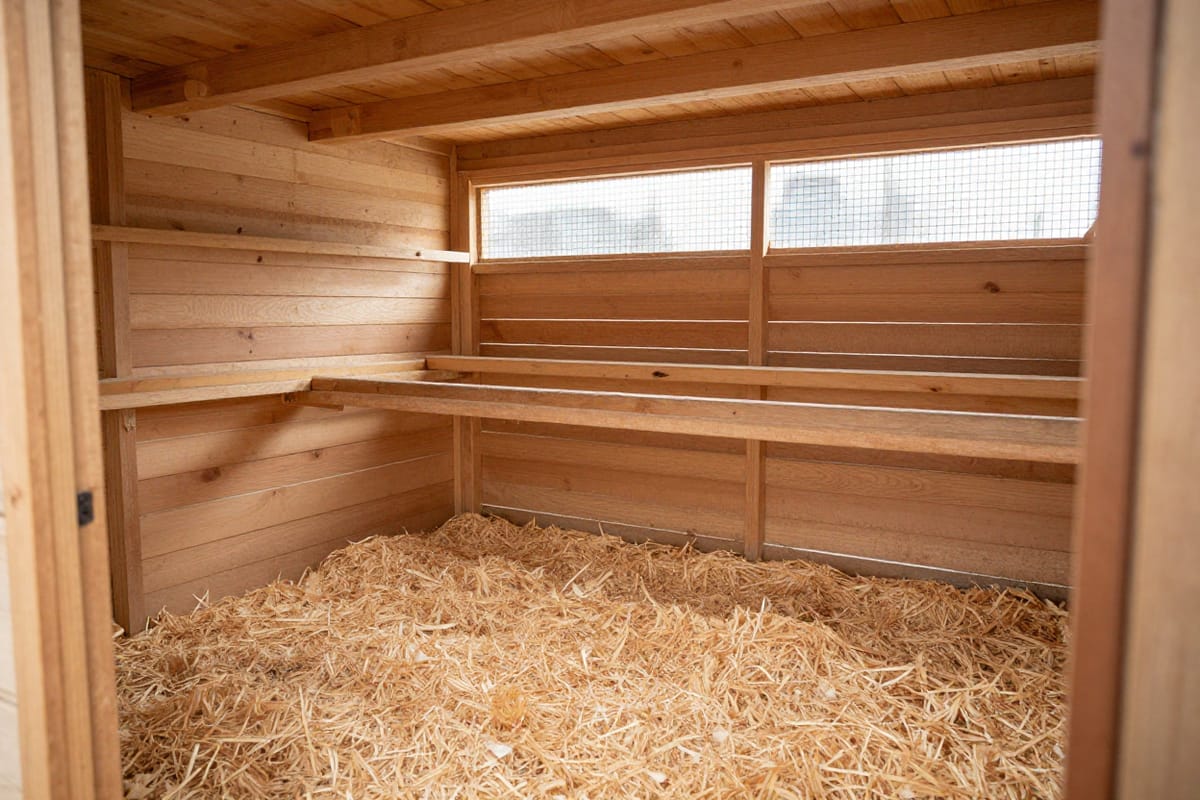
You want still air at roost height and moving air above it. Put vents high on the walls, near the roofline, so warm, moist air escapes upward instead of blowing across the birds. A common guideline is about 1 sq ft (0.09 m²) of ventilation per 10 sq ft (0.9 m²) of floor. Keepers argue over the exact figure; we start generous and partly close one vent only in the worst wind.
Block any gaps at roost or floor level that let wind blow straight through. On a windy night, hold a hand near the roost. If you feel a breeze, so do the hens. An ammonia smell, or frost on the inside of the roof in the morning, means the coop needs more ventilation. There’s more on layout in our coop guides.
Roosts that keep feet warm
Chickens sleep crouched over their feet with their feathers fluffed down over their toes. That only works on a wide, flat perch.
- Use a 2x4 (about 50 x 100 mm) with the 3.5 in (9 cm) face up. Round dowels leave toes exposed.
- Allow 8-10 in (20-25 cm) of roost per bird. In winter they bunch closer anyway.
- Set roosts higher than the nest boxes but well below the vents.
- Skip metal perches, which draw heat out of feet.
Water that does not freeze
Frozen water is the chore winter hands you every day. There are three realistic options:
| Option | Pros | Cons |
|---|---|---|
| Swap waterers twice a day | No electricity, cheap | Relies on you, every day |
| Heated base or heated waterer | Reliable in hard freezes | Needs safe outdoor power |
| Black rubber bowls | Ice knocks out easily | Still freeze overnight |
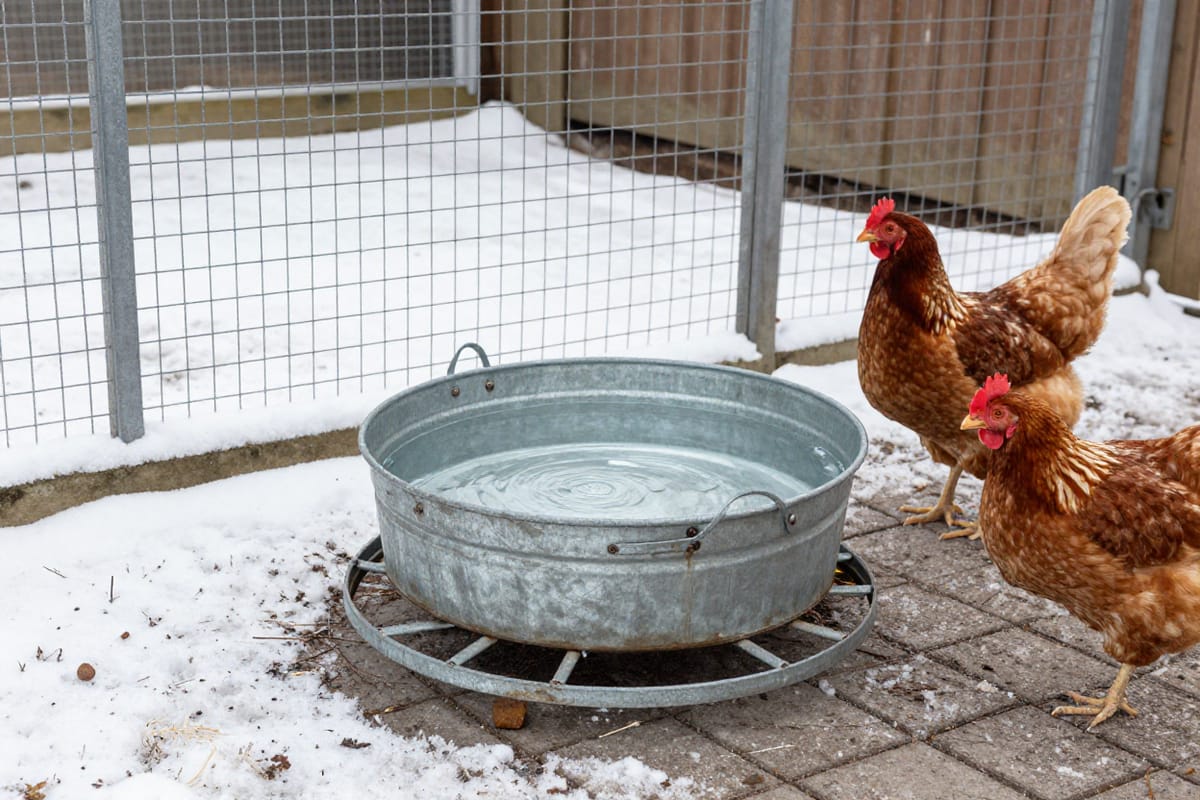
Heated waterers run at low wattage with enclosed elements, so the fire risk is far lower than with a lamp, but they are still electrical. Use outdoor-rated cords on a ground-fault (RCD) protected outlet, keep cords where hens can’t peck them, and check connections weekly. Where you can, keep the water in the run rather than the coop to hold indoor humidity down.
Why we don’t use heat lamps
Every winter, heat lamps start coop fires. A typical 250-watt bulb gets hot enough to ignite shavings, straw or the fine dust that settles on every surface in a coop. One knock from a hen or one slipped clamp is enough, and a wooden shed full of bedding burns fast.
The second problem is less obvious. Birds kept artificially warm never acclimate. If the power fails on the coldest night of the year, they face a sudden drop they aren’t ready for, and that is harder on them than steady cold.
Some keepers use a flat radiant panel made for coops, firmly mounted, for an old, poorly feathered or recovering bird. We’d only do that as an exception. A hen that is hunched, lethargic or off her food in cold weather may be ill rather than cold, so see our health section and call an avian vet if she hasn’t perked up within a day.
Winter feed and bedding checklist
- Layer feed at 16% protein as the base ration, available all day.
- A small handful of scratch grains in late afternoon gives them extra digestion heat overnight. Keep treats to about 10% of the diet.
- Deep litter: start with 4-6 in (10-15 cm) of pine shavings in autumn, then stir it and top it up instead of mucking out. It insulates the floor. In very damp climates some keepers prefer weekly clean-outs, and either approach works as long as the bedding stays dry.
- A windbreak in the run, using a tarp or clear panels on the side the prevailing wind comes from.
- Cold-hardy breeds make winter easier: Wyandottes and Brahmas, which have small rose or pea combs, and dense-feathered Orpingtons. Browse our breed profiles when planning next year’s flock.
Most flocks get through winter fine with a dry coop, a flat roost and water that stays liquid. Look in on the birds at dusk and the water at dawn. The lamp can stay in the shed.