Molting Chickens Week by Week, and How to Care for Them
What molting chickens look like week by week, why hens stop laying, how much protein to feed during molt, and how to tell molt from mites or pecking.
Nest Box Notes team ·
- Time
- 8-16 weeks per molt
- Cost
- $20-50 extra feed
- Flock size
- Any size
- Level
- Beginner
Molting chickens shed and regrow their feathers about once a year, usually as days shorten in late summer and fall. A molt typically runs 8 to 16 weeks. Feathers drop from the head and neck first, then the back, breast, wings and tail. Most hens stop laying until it’s over, because their bodies put protein into new feathers instead of eggs.
Mostly, you wait it out. Raise feed protein to 18–20%, keep oyster shell available, handle birds as little as possible and keep them dry and out of drafts. Feather loss that is patchy, scabby, bloody or out of season usually has another cause, such as mites, pecking or an overkeen rooster. We explain how to tell them apart below.
What molting chickens look like week by week
Every hen is different, but a normal fall molt follows a fairly predictable order.
| Weeks | What you will usually see |
|---|---|
| 1–2 | Laying slows or stops. Comb and wattles turn pale and shrink. Loose feathers appear in the coop, mostly from the head and neck. |
| 3–5 | Neck, back and breast look thin. Pin feathers show up as spiky, blue-grey quills. Hens are quieter and dislike being touched. |
| 6–9 | Wing and tail feathers drop, a few at a time. The coop floor looks like a pillow fight. New feathers open on the head and neck. |
| 10–16 | Plumage fills in and looks glossy. Combs redden again. Laying restarts, often slowly at first. |
Some hens are hard molters. They look half-plucked within a fortnight, then regrow fast in 6 to 8 weeks. Others drop a few feathers at a time and you barely notice. Spring-hatched pullets usually skip their first fall, so expect the first full molt at around 18 months. Older hens tend to molt longer.
Why laying stops during molt
A large egg contains about 6 grams of protein, and feathers are almost entirely protein. A hen can’t build a full coat and a daily egg at the same time, so egg production shuts down. Shorter days add to it: most hens lay poorly once daylight drops below about 14 hours.
The break also rests the reproductive tract, and many keepers see better shells once laying resumes.
Keepers disagree about adding coop lighting to keep hens laying through winter. We wouldn’t switch it on during a molt. Pushing for eggs while a hen is regrowing feathers stretches her protein even thinner. If you use lighting at all, wait until the new plumage is in. More on egg timing at /topics/eggs.
Protein and feed during molt
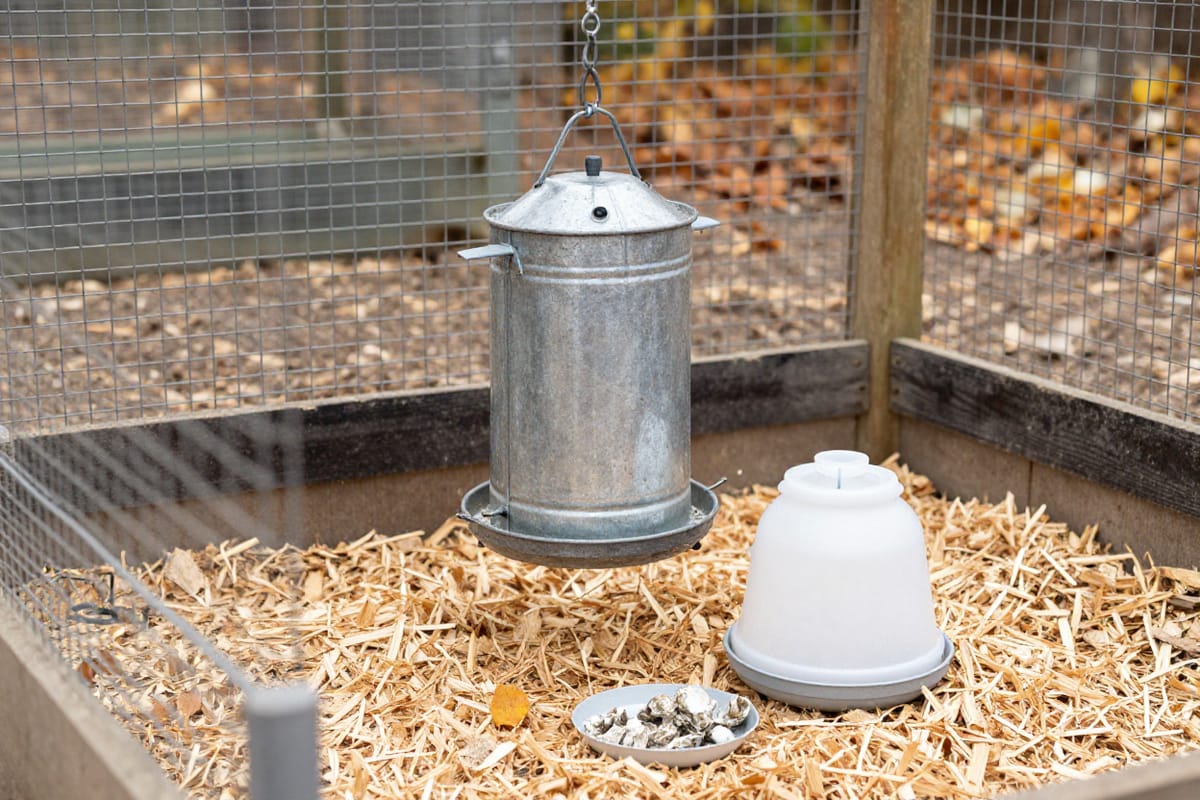
Standard layer feed is about 16% protein. During molt we would start with an 18–20% all-flock or grower feed, with oyster shell in a separate dish. Those feeds carry far less calcium than layer ration, so the free-choice shell matters once eggs return.
- Switch feeds gradually over 5 to 7 days, mixing old and new.
- Offer oyster shell free choice, never mixed into the feed.
- Add protein treats such as dried mealworms, black soldier fly larvae or scrambled egg, kept to roughly 10% of the diet.
- Cut back on scratch grains. At about 8–10% protein, they fill hens up without doing much for feathers.
- Move back to layer feed once most hens are laying again.
Don’t forget water. A hen that drinks poorly will eat poorly, and regrowing a coat takes a lot out of her.
Day-to-day care for a molting flock
Pin feathers have a blood supply and are tender, so most of the care here is about leaving hens alone and keeping them comfortable.
- Handle as little as possible. Skip routine picking up, and keep health checks brief and gentle.
- Keep the coop dry and draft-free but ventilated. A hen missing half her feathers feels the cold, but damp air is worse than cool air. We wouldn’t add heat lamps, because the fire risk outweighs the benefit.
- Hold off on new birds and big changes. Moving coops or adding flock members during molt adds stress and can slow regrowth.
- Watch for pecking. Pin feathers attract attention, and a bleeding quill draws more. Separate any bird with an open wound until it heals.
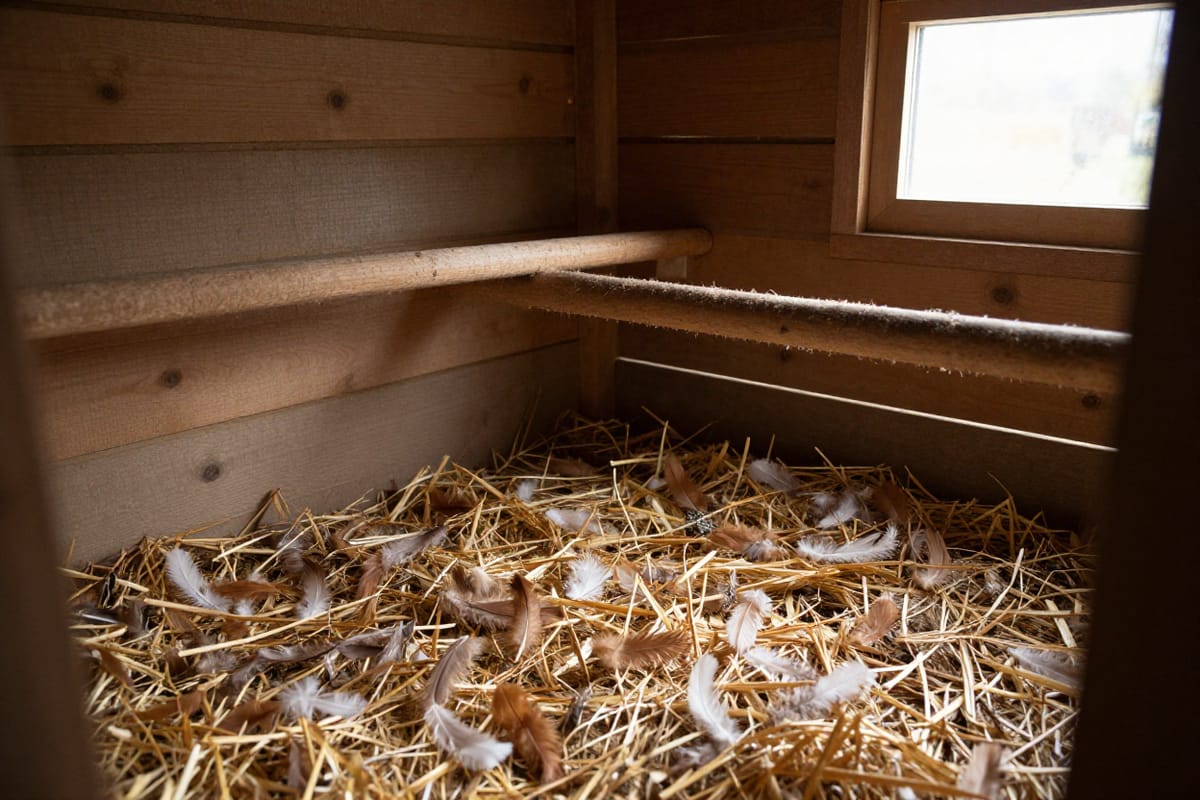
- Clear piles of shed feathers from the bedding so you can spot parasites and keep the coop clean.
Our general routine for keeping a flock comfortable through the cold months is at /topics/care.
When feather loss is not molt
Molt is orderly, gradual and roughly symmetrical, and new pin feathers follow the loss. Be suspicious when the pattern looks different.
- Mites or lice: Feather loss around the vent, under the wings or on the back, with scabby or reddened skin. Part the feathers in good light and look for crawling specks or egg clusters at the feather base.
- Feather pecking: Broken or chewed feathers, bare patches on the back, tail base or vent, sometimes with blood. Often linked to crowding, boredom or low protein.
- Rooster damage: Bare backs and shoulders where he grips during mating. A hen saddle helps while feathers return.
- Broodiness: A neat bare patch on the breast, which the hen plucks herself to warm eggs.
- Stress molt: A partial molt, often neck feathers only, after a move, predator scare or heat wave. It can happen at any time of year.
When to call an avian vet
A normal molt can make a hen look rough, but she should still eat, drink, forage and roost. Contact an avian vet if a bird is lethargic, stops eating, loses weight, has diarrhea, has open or infected skin, or shows no regrowth after about 16 weeks. Feather loss with any of those signs points to illness, not molt.
While you arrange care, separate the bird somewhere warm and quiet with food and water. Don’t give medications without advice. See /topics/health for more on common flock problems.