How to Spot and Get Rid of Chicken Mites in Your Coop
How to tell red mites from northern fowl mites, check hens at night, deep clean the coop and keep chicken mites away with a simple routine.
Nest Box Notes team ·
- Time
- 2-3 hours per deep clean, repeated 3 times; 10 minutes for a night check
- Cost
- $20-80
- Flock size
- 3-12 hens
- Level
- Beginner
Chicken mites are tiny parasites that feed on blood. Backyard flocks usually meet two kinds: the poultry red mite, which hides in the coop by day and feeds at night, and the northern fowl mite, which lives on the bird full time. Watch for pale combs, fewer eggs, hens reluctant to go in at dusk, and grey dust or red smears on perches. Treatment is the same for both. Confirm which mite you have, treat the birds and the coop together, then repeat at 7-day intervals to break the breeding cycle.
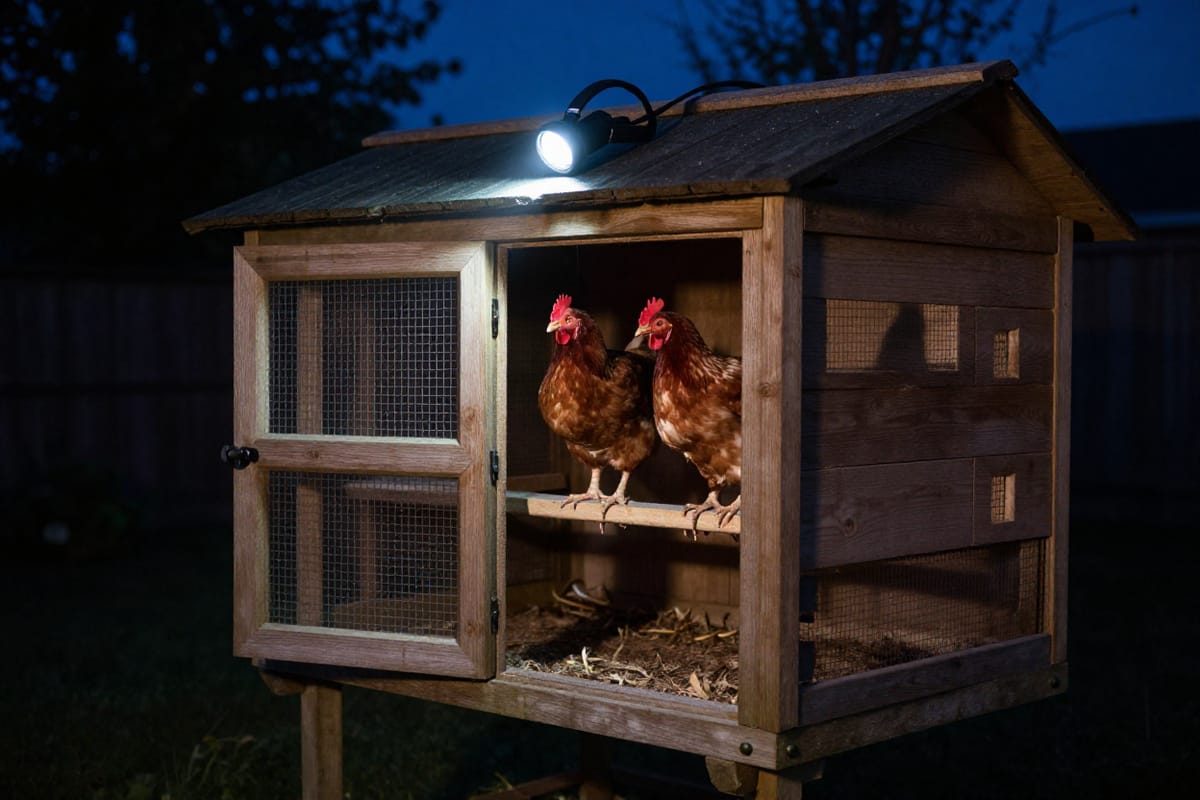
Start with a night check. Red mites are rarely seen in daylight, which is why many keepers miss them until numbers are high. Ten minutes after dark with a torch and a white paper towel will tell you more than hours of looking during the day.
Red mites vs northern fowl mites
Both are about 1 mm (0.04 in) long, roughly the size of a full stop. The easiest way to tell them apart is where you find them.
| Poultry red mite | Northern fowl mite | |
|---|---|---|
| Where it lives | Cracks, perch ends, nest box joints | On the bird, mostly around the vent |
| When it feeds | At night | Constantly |
| Colour | Grey, red after feeding | Dark red to black |
| Telltale sign | Grey-white dust and red smears on perches | Dirty, crusty feathers below the vent |
| Peak season | Warm months, but survives winter in the coop | Cooler months, often worse in winter |
Red mites can survive for months in an empty coop without feeding, so leaving a house empty for a few weeks will not clear them. Northern fowl mites die quickly off a host, so with them you treat the birds first. Both cause anaemia, and chicks and young pullets suffer most.
Checking birds at night for chicken mites
- Go out an hour or two after the flock has settled. A head torch keeps both hands free.
- Wipe a white paper towel along the underside of each perch. Red streaks are fed red mites you have crushed.
- Lift a perch out of its bracket and check the joint. Clusters look like grey-red grit that moves.
- Pick up a hen or two and part the feathers under the vent and wings. Northern fowl mites show as moving specks, with greyish egg clumps at the feather bases.
- Check your sleeves afterwards. Mites do not live on people, but if some are crawling on you, the load is heavy.
Do this monthly, and weekly from late spring to early autumn, when red mite numbers climb fastest.
Cleaning the coop after an infestation
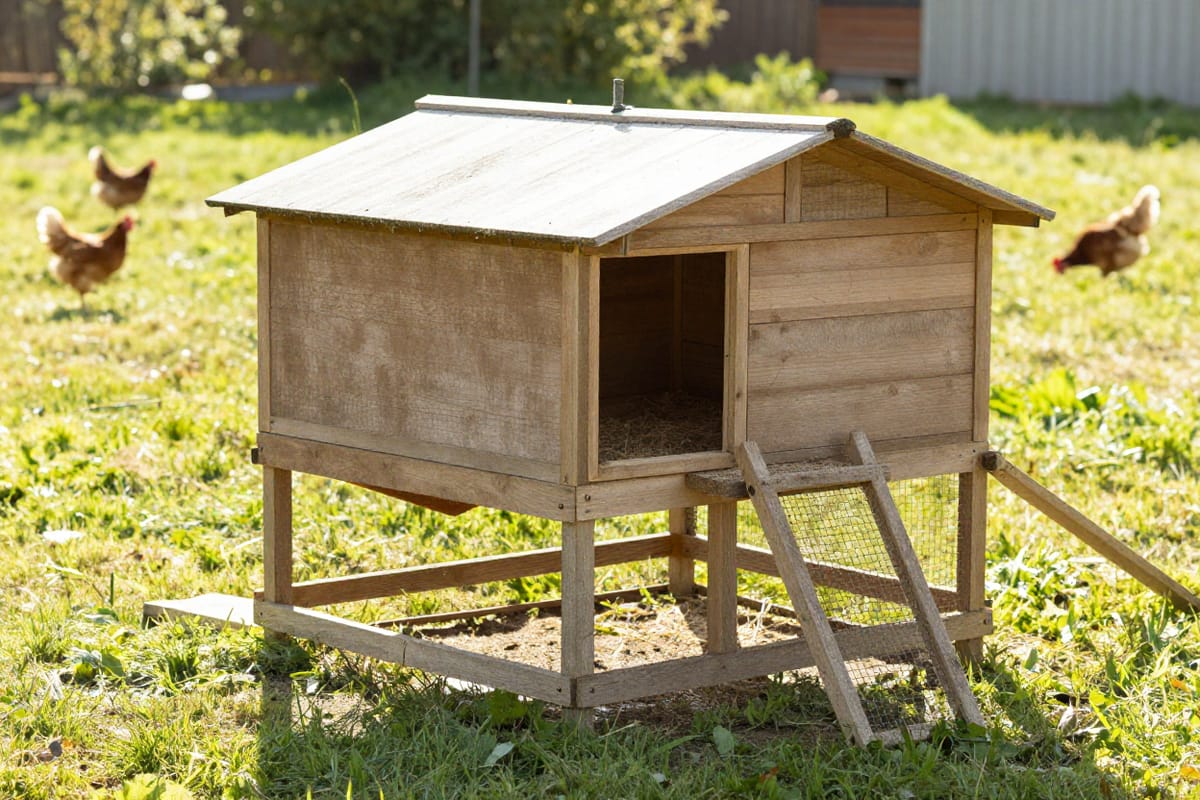
A small wooden coop takes two to three hours. Pick a dry, mild day so everything dries before the hens go back in.
- Shut the hens in the run or a spare pen.
- Remove all bedding and nesting material. Bag it and bin it, away from the coop.
- Take out perches, nest box liners and droppings trays.
- Scrape and brush every joint, roof edge and perch bracket. Mites pack into the tightest gaps.
- Wash with hot soapy water or use a steam cleaner. Steam gets into crevices and leaves no residue.
- Let everything dry completely.
- Apply a mite product labelled for poultry houses and work it into cracks and perch ends. Follow the label exactly, including anything it says about laying hens and eggs.
- Re-bed with fresh shavings or straw.
Then do the clean and treatment twice more, seven days apart. One treatment does not reliably kill mite eggs, and in warm weather red mites can go from egg to adult in about a week. Stopping after a single clean is the most common reason infestations come straight back.
Old wooden coops with lots of joints are hard to clear. Plastic coops have fewer hiding places and are easy to steam clean, which is worth weighing up when you replace one. Our coop guides cover the options.
Treating the birds
With northern fowl mites, the birds need treating directly. With red mites the coop is the main target, though treating the birds at the same time helps.
Poultry mite products come as powders, sprays and prescription treatments. The rules on what you can use on laying hens differ between the US and UK, and some products have egg withdrawal periods. Read the label, and ask an avian vet before using anything not specifically labelled for chickens. Do not use dog or cat flea products.
Keepers disagree about diatomaceous earth. Some rely on it in dust baths and on perches. Others find it does little once mites are established, and the fine dust is unpleasant to breathe. We see it as a minor help with prevention, not a cure. A dry dust bath of soil or sand does more, because it lets hens deal with light loads themselves. Our care section explains how to set one up.
A prevention routine that holds
- Do the paper towel night check monthly, and weekly in warm months.
- Quarantine new birds for 30 days and check them before mixing.
- Seal cracks and gaps with caulk where you can.
- Use removable perches with smooth, sealed brackets.
- Change bedding regularly and deep clean at least twice a year.
- Keep wild birds out of the coop and away from feed.
- Give hens a dry, covered dust bath all year.
When to call an avian vet
Call a vet if a hen is very pale, weak, hunched or off her food, if chicks have mites, or if an infestation comes back after three rounds of cleaning. A heavy load can kill a bird through blood loss, and a pale comb can also point to other problems. Our health section covers other causes of pale combs and lethargy.